
If you’re searching for the best supplements vitamin D can offer, it’s easy to assume that a higher dose or more expensive product must be better.
It isn’t that simple.
Vitamin D is important for normal bones, muscles and calcium absorption, but the amount you need depends on factors including your diet, sunlight exposure and individual risk of deficiency. For athletes, this is particularly relevant because training indoors, winter sport and limited sunlight exposure can all make vitamin D status worth considering.
This guide explains what to look for when choosing a vitamin D supplement, how much you actually need, and how two products available through our affiliate partners compare.
Quick answer: For most adults in the UK, a daily vitamin D supplement containing 10 micrograms (400 IU) is the standard government recommendation during autumn and winter. Some people may need supplementation throughout the year. Higher-dose products aren’t automatically better, and you should avoid exceeding 100 micrograms (4,000 IU) per day unless advised otherwise by a healthcare professional.
Affiliate disclosure: Some links in this article are affiliate links. If you purchase through one of them, The Grassroots Pro may receive a commission at no additional cost to you.
Contents
- Why vitamin D matters
- Do athletes need vitamin D supplements?
- How much vitamin D do you need?
- Vitamin D2 vs vitamin D3
- What to look for in a supplement
- Our vitamin D supplement picks
- Bulk Vitamin D3 Tablets
- Our Amazon option
- Which should you choose?
- Common mistakes
- What the science says
- FAQs
- Related articles
- Conclusion
Why Vitamin D Matters

Vitamin D has several important roles in the body.
It helps regulate calcium and phosphate, which are needed for healthy bones and teeth, and is also important for normal muscle function.
That makes it particularly relevant to anyone who regularly exercises.
For footballers, runners and other athletes, maintaining adequate vitamin D isn’t about turning a supplement into a performance enhancer. It’s about making sure an important nutrient isn’t unnecessarily lacking.
The problem is that vitamin D can be difficult to obtain in sufficient quantities from food alone.
Good dietary sources include:
- Oily fish such as salmon, sardines and mackerel
- Egg yolks
- Red meat
- Some fortified foods
The body can also produce vitamin D through sunlight exposure. However, in the UK, sunlight isn’t strong enough for the body to make sufficient vitamin D during much of the autumn and winter.
That is why UK government guidance recommends that adults consider a daily supplement containing 10 micrograms during autumn and winter.
Do Athletes Need Vitamin D Supplements?
Not every athlete needs a high-dose vitamin D supplement.
In fact, it’s worth avoiding the idea that athletes automatically require more vitamin D simply because they exercise.
What matters more is whether an individual is getting enough.
This can be affected by:
- Time spent outdoors
- Season
- Training environment
- Diet
- Skin exposure to sunlight
- Individual risk factors
- Existing vitamin D status
Research has found that vitamin D insufficiency is relatively common among athletes. A 2022 systematic review and meta-analysis estimated vitamin D insufficiency at around 30% among adult elite athletes, although the studies and definitions varied.
That doesn’t mean every athlete should immediately start taking a high-dose supplement.
It means vitamin D status is worth paying attention to, particularly for athletes who spend a lot of time indoors or train predominantly during the winter.
How Much Vitamin D Do You Actually Need?
This is where supplement labels can become confusing.
Vitamin D is commonly shown in either:
Micrograms (µg or mcg)
or
International Units (IU)
The conversion is:
1 microgram = 40 IU
So:
| Vitamin D | Equivalent IU |
|---|---|
| 10 µg | 400 IU |
| 25 µg | 1,000 IU |
| 50 µg | 2,000 IU |
| 100 µg | 4,000 IU |
For most adults, UK guidance recommends 10 micrograms (400 IU) per day during autumn and winter. Some groups are advised to consider supplementation throughout the year.
The NHS also states that adults should not take more than 100 micrograms (4,000 IU) per day unless advised otherwise, because excessive vitamin D can cause too much calcium to build up in the body.
That upper limit is particularly important when comparing supplements.
A product containing 100 µg isn’t necessarily “better” than one containing 10 µg.
It is simply a much higher dose.
Vitamin D2 vs Vitamin D3
You’ll commonly see two forms of vitamin D:
Vitamin D2
Also known as ergocalciferol.
Vitamin D3
Also known as cholecalciferol.
Vitamin D3 is the form you’ll commonly see in supplements, including the Bulk product discussed below.
When comparing products, the form of vitamin D is worth checking, but the dose and whether you actually need supplementation are more important than simply choosing the product with the biggest number on the label.
What Should You Look For in the Best Vitamin D Supplements?
There are a few things worth checking before buying.
1. Dose
This should be your first consideration.
Don’t automatically choose the highest dose.
For routine supplementation, UK guidance is based around 10 µg per day for adults during autumn and winter.
2. Vitamin D3
Many products use vitamin D3 (cholecalciferol).
It’s a common and convenient form of supplementation.
3. Serving size
Check how much vitamin D you receive per tablet or serving, rather than simply looking at the size of the bottle.
4. Number of servings
A cheap-looking bottle isn’t necessarily better value if it contains considerably fewer doses.
5. Additional ingredients
Some products combine vitamin D with other nutrients such as calcium or vitamin K.
That isn’t automatically a benefit.
If you only want vitamin D, a straightforward product may be preferable.
Our Vitamin D Supplement Picks
Rather than listing dozens of random products, we’re focusing on the two products available through our affiliate partnerships.
That gives you a more useful comparison while avoiding the usual “here are 25 vitamin D supplements” approach.
Bulk Vitamin D3 Tablets
Best for: A straightforward vitamin D3 supplement
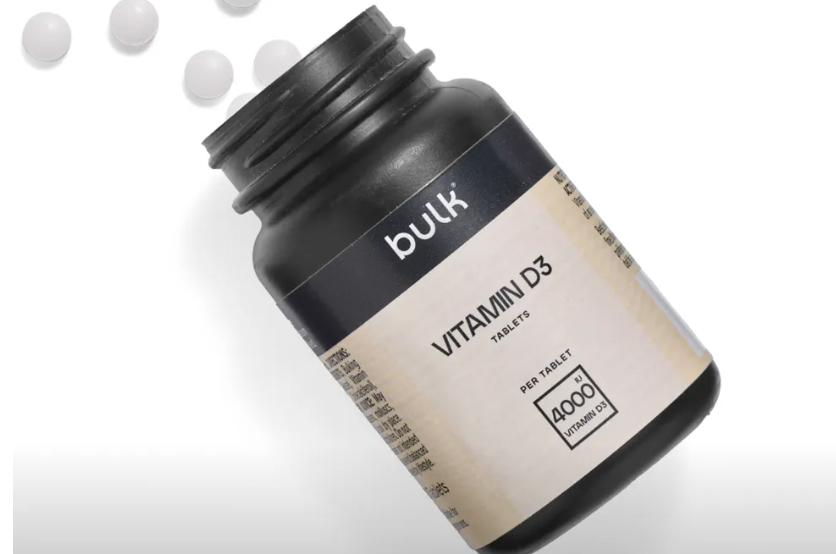
Bulk’s Vitamin D3 Tablets are a simple option for someone looking specifically for vitamin D3 rather than a large combination of vitamins and minerals.
The current Bulk product contains 100 micrograms (4,000 IU) of vitamin D3 per tablet and is available in 90- and 270-tablet versions.
That is an important point when considering this product.
100 µg is the UK adult upper daily limit, not the standard 10 µg recommendation for routine supplementation.
Therefore, we wouldn’t present this product as something everyone should automatically take every day.
If you’re considering a high-dose vitamin D product, particularly if you already take a multivitamin or another supplement containing vitamin D, it’s sensible to check your total intake and speak with a healthcare professional if you’re unsure.
What we like
- Vitamin D3 rather than a large blend of ingredients
- Straightforward tablet format
- Available in larger quantities
- Useful option for people specifically looking for a higher-dose vitamin D3 product
What to consider
The 100 µg dose is high compared with the standard UK recommendation of 10 µg per day.
That means this isn’t necessarily the best choice simply because it contains more vitamin D.
ZipVit Vitamin D Option
Best for: Comparing a more conventional vitamin D supplement
The Amazon product you’re considering gives you another useful comparison point.
Rather than judging the product purely on brand or price, look at:
- Vitamin D form
- Dose per serving
- Number of servings
- Price per serving
- Other ingredients
- Whether the dose fits your intended use
Check the Vitamin D supplement on Amazon
Bulk vs Amazon: Which Should You Choose?
There’s no reason to declare one product universally “the winner.”
Instead, think about what you’re actually looking for.
| What you’re looking for | What to consider |
| Straightforward vitamin D3 | Bulk Vitamin D3 |
| Lower-dose everyday supplementation | Check the Amazon product’s actual dose |
| High-dose vitamin D3 | Bulk provides 100 µg per tablet |
| Simple ingredients | Compare the ingredient lists |
| Best value | Compare cost per serving |
| Already taking other supplements | Check your total vitamin D intake |
The biggest distinction between these products may actually be dose, rather than brand.
That’s a much more useful way of choosing a supplement.
Common Mistakes When Buying Vitamin D
Choosing the Highest Dose
More isn’t automatically better.
Vitamin D is fat-soluble, meaning excessive long-term intake can cause problems.
The NHS states that adults should not take more than 100 µg (4,000 IU) per day unless advised otherwise.
Taking Multiple Products Without Checking Labels
This is an easy mistake.
You might take:
- Vitamin D
- Multivitamin
- Calcium + vitamin D
- Other fortified supplements
without realising that you’re adding the vitamin D from each product together.
Assuming Athletes Need More
Training harder doesn’t automatically mean you should take a larger vitamin D dose.
Your requirements depend on your overall circumstances.
Treating Vitamin D Like a Performance Booster
Vitamin D isn’t a substitute for:
- Proper nutrition
- Strength training
- Recovery
- Sleep
- Good football training
Its importance is primarily related to maintaining normal physiological function.
Ignoring Your Diet and Sun Exposure
Supplements are only one part of the picture.
Your diet and sunlight exposure also contribute to your vitamin D status.
What Does the Science Say About Vitamin D and Athletes?

This is where things get interesting.
There is evidence that vitamin D insufficiency occurs relatively frequently among athletes, but that doesn’t mean supplementation automatically improves performance in everyone.
A 2024 systematic review looked specifically at vitamin D supplementation in elite athletes. It found some evidence of improvements in measures such as strength and anaerobic power in supplemented groups, but results for sprint speed were less consistent, and the evidence surrounding bone health was mixed. The authors concluded that more research is needed.
That distinction matters.
It would be misleading to say:
“Vitamin D supplements make footballers faster.”
The evidence doesn’t support such a simple claim.
A more reasonable conclusion is:
Athletes should avoid vitamin D deficiency, but taking more vitamin D than necessary isn’t a guaranteed route to better performance.
For a footballer, the basics remain much more important:
Training → nutrition → recovery → sleep → supplementation where appropriate
Vitamin D and Football

Footballers can have a particularly interesting relationship with vitamin D.
Training isn’t always performed outdoors, particularly during winter.
Add in:
- Shorter daylight hours
- Indoor gym sessions
- Training after work or school
- Covered clothing
- Reduced sunlight exposure
and it’s understandable why vitamin D supplementation is commonly discussed among athletes.
This doesn’t mean every footballer needs a high-dose supplement.
Instead, vitamin D should sit alongside the rest of your nutrition strategy.
If you’re looking at your overall football nutrition, our Soccer Player Diet guide is a natural next step.
And if you’re interested in supplements more broadly, our Creatine for Soccer Players guide covers one of the better-researched sports supplements in considerably more detail.
FAQs
What are the best supplements vitamin D products?
The best vitamin D supplement depends on the dose you need, the form of vitamin D, price per serving and your individual circumstances. There isn’t one product that is best for everyone.
How much vitamin D should adults take?
UK guidance recommends adults consider taking 10 micrograms (400 IU) of vitamin D daily during autumn and winter. Some people may need supplementation throughout the year.
Is 100 µg of vitamin D too much?
100 µg (4,000 IU) is the UK adult upper daily limit, rather than the standard daily recommendation. You should not exceed this amount unless advised by a healthcare professional.
Is vitamin D3 better than vitamin D2?
Vitamin D3 (cholecalciferol) is widely used in supplements, including the Bulk product discussed here. When choosing a supplement, consider the form alongside the dose and your individual requirements.
Should footballers take vitamin D?
Not necessarily. Footballers should aim to maintain adequate vitamin D, but supplementation requirements vary. Winter training and limited sunlight exposure can make vitamin D supplementation particularly relevant in the UK.
Can vitamin D improve football performance?
There isn’t enough evidence to say that vitamin D supplementation will make every footballer faster or stronger. Research in athletes has produced mixed results, although some studies have reported improvements in strength or anaerobic performance.
Can you get enough vitamin D from food?
It is possible to obtain vitamin D from foods including oily fish, egg yolks and some fortified foods, but the NHS notes that it can be difficult to get enough from diet alone.
When should you take vitamin D?
Vitamin D can be taken as part of your normal daily routine. The more important consideration is taking an appropriate amount rather than trying to find a special timing strategy around exercise.
Related Articles
[Soccer Player Diet: A Complete Guide to Nutrition for Footballers]
A broader guide to building a football-focused diet.
[Creatine for Soccer Players: Benefits, Dosage and How It Works]
A deeper look at one of the most researched sports supplements.
[Electrolyte Drinks for Athletes: What to Look For & Best Options]
Useful if you’re also considering hydration and electrolyte supplementation.
[Strength Training for Football]
A natural next step for athletes looking to improve physical performance.
Conclusion
The search for the best supplements vitamin D can quickly become confusing because products are available in dramatically different doses.
But choosing the highest-strength tablet isn’t necessarily choosing the best supplement.
For most adults in the UK, the standard recommendation is 10 micrograms (400 IU) per day during autumn and winter, with some people advised to supplement throughout the year.
The Bulk Vitamin D3 product is an interesting option because it provides a much higher 100 µg (4,000 IU) dose per tablet. That makes it important to consider how and why you’re using it rather than simply assuming the higher number makes it better.
For athletes, the bigger picture matters most.
Vitamin D can play an important role in normal bone and muscle function, and maintaining adequate levels is sensible. But supplementation should complement good nutrition, training and recovery rather than replace them.
The best vitamin D supplement isn’t necessarily the strongest one. It’s the one that provides an appropriate amount for your needs.