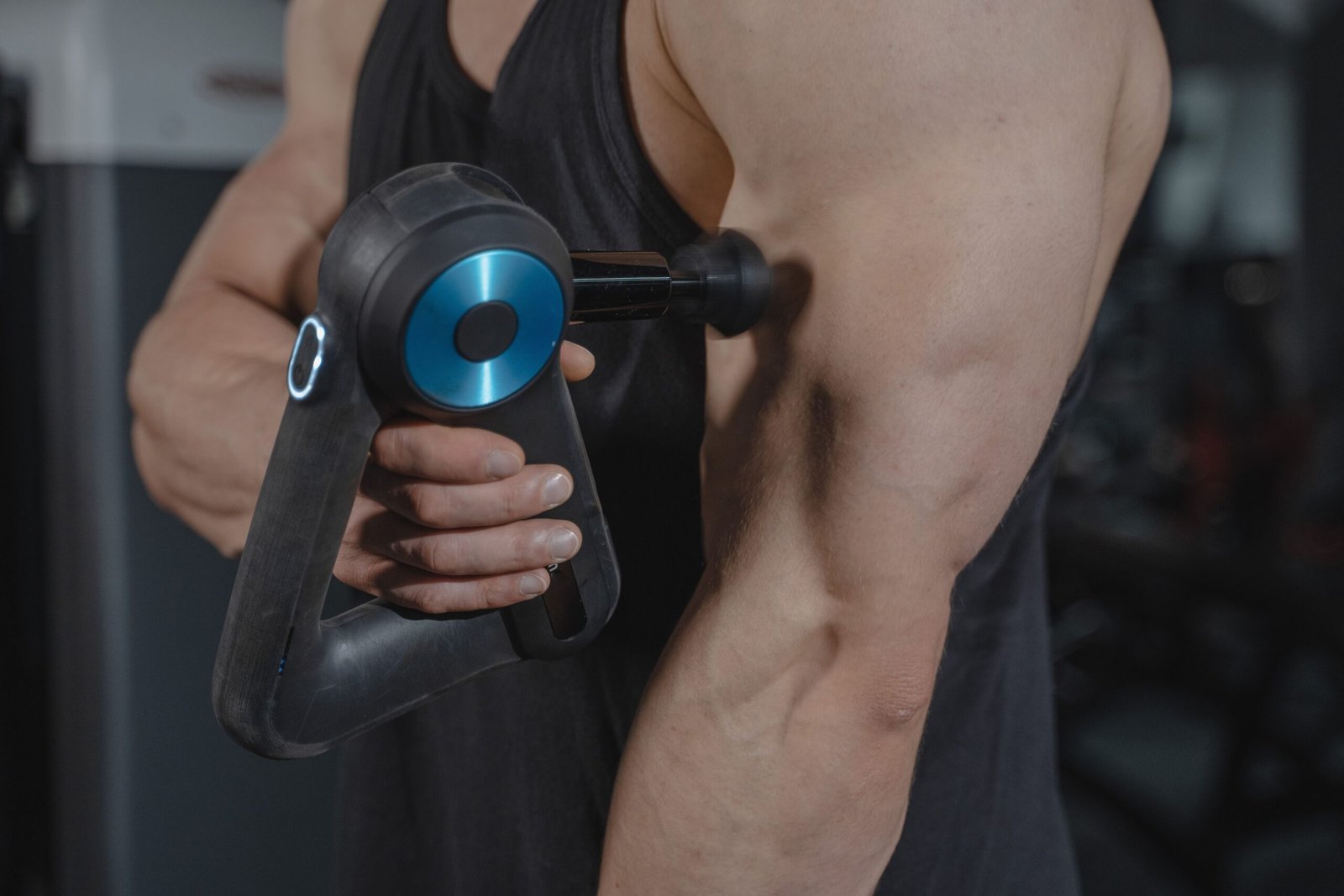
If you’ve ever finished a hard workout with tight, heavy muscles and wished you had a quick way to loosen them up, you’ve probably come across massage guns.
But with hundreds of models available, ranging from cheap compact devices to premium percussion massagers, working out which one is actually worth buying can be difficult.
That’s where these massage gun reviews come in.
We’ve compared three options at different price points to help you find the right massage gun for your needs — whether you’re looking for a feature-packed everyday device, something small enough to throw in your gym bag, or an affordable introduction to percussive therapy.
Quick answer: For most people, the RENPHO Massage Gun is the strongest all-round option of the three. If portability and price are your priorities, the compact 10-head model offers a useful middle ground, while the Cotsoco Mini Massage Gun is the budget pick for anyone who wants to try a massage gun without spending much.
This article contains affiliate links. If you purchase through one of our links, we may earn a commission at no additional cost to you. This does not affect how we assess the products.
Quick Comparison
| Category | Our Pick | Best For |
| Best Overall | RENPHO Massage Gun | Regular users wanting a more complete device |
| Best Portable | Compact 10-Head Massage Gun | Gym bags, travel and convenience |
| Best Budget | Cotsoco Mini Massage Gun | Beginners and occasional use |
Table of Contents
- What does a massage gun actually do?
- Best massage gun overall: RENPHO
- Best portable massage gun
- Best budget massage gun: Cotsoco
- How we would choose between them
- Do massage guns actually work?
- How to use a massage gun properly
- Massage guns for footballers
- Common mistakes to avoid
- Are massage guns safe?
- FAQs
- Final verdict
What Does a Massage Gun Actually Do?
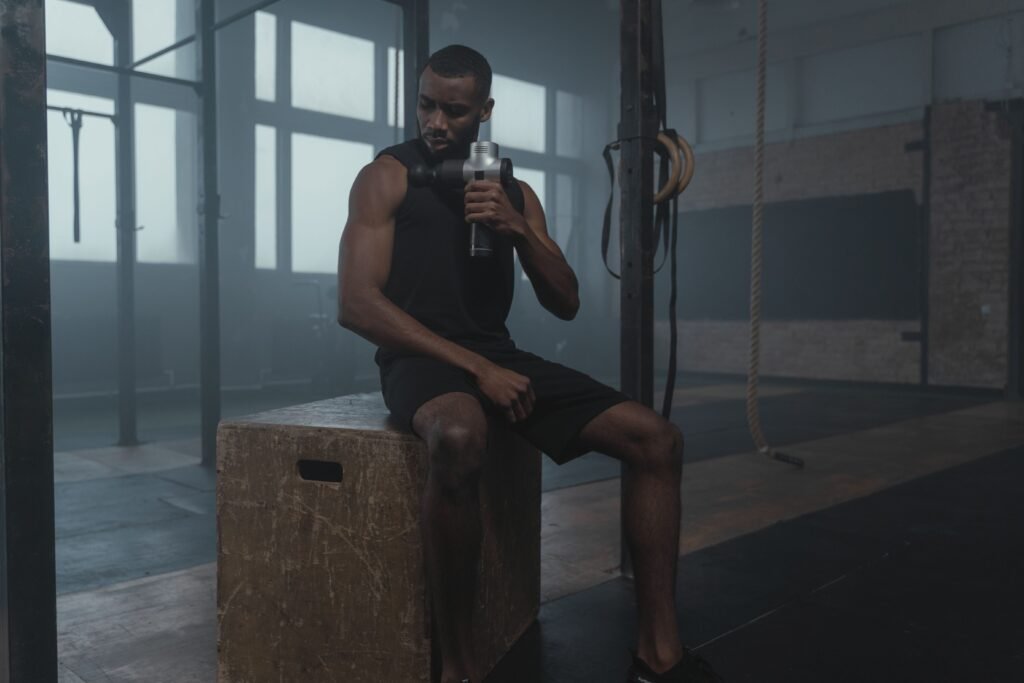
Massage guns use percussive therapy — rapid pulses of pressure delivered through an attachment head — to work on soft tissue.
The aim isn’t to magically “repair” damaged muscle. Instead, massage guns may help temporarily reduce the feeling of stiffness and improve range of motion, making them particularly useful as part of a wider warm-up or recovery routine.
Research into massage guns is still developing, but the evidence so far is reasonably encouraging for short-term improvements in flexibility, range of motion and some recovery-related outcomes. A systematic review of 11 studies found potential benefits for range of motion, flexibility and recovery, although the researchers also highlighted the limited number and generally moderate quality of studies available.
That distinction is important.
A massage gun is a recovery tool, not a replacement for sleep, nutrition, appropriate training and rest.
Best Massage Gun Overall: RENPHO
RENPHO Massage Gun — Best Overall
Best for: Regular users who want a more complete massage gun without moving into the very highest-priced premium models.
The RENPHO shown in our comparison is the most substantial of the three options.
It has multiple speed settings, several attachment heads and a display built into the device. The product shown also comes with a carry case, which is useful if you want to keep the gun organised between sessions.
The larger design isn’t necessarily a disadvantage. In fact, for people who primarily use a massage gun at home after training or exercise, the additional features and more substantial build can make it the more attractive choice.
What we like
- Multiple speed settings
- Several interchangeable heads
- Digital display
- Carry case
- Suitable for a variety of muscle groups
- More substantial than the compact alternatives
- Strong customer rating shown on the product listing
Potential drawbacks
- Larger than a mini massage gun
- More expensive than the budget options
- Probably unnecessary for someone who only wants occasional light use
Best for
I’d choose the RENPHO if you’re likely to use a massage gun regularly rather than occasionally.
It’s particularly appealing if you want one device that can become part of your normal post-workout routine.
Check the current price and availability
Best Portable Massage Gun
Compact 10-Head Massage Gun — Best Portable
Best for: People who prioritise portability, convenience and having multiple attachment options.
The second option is a smaller massage gun designed around convenience.
The product shown in the listing comes with 10 massage heads, giving you plenty of options for experimenting with different areas and sensations.
The main advantage here isn’t necessarily raw performance. It’s the fact that a smaller massage gun is easier to throw into a gym bag, suitcase or car.
That can make a surprisingly big difference.
The best recovery device is often the one you actually have with you.
What we like
- Compact design
- 10 attachment heads
- Easy to take to the gym
- Relatively inexpensive
- Multiple intensity settings
- Good option for people new to massage guns
Potential drawbacks
- Less substantial than the RENPHO
- More attachments don’t automatically mean better performance
- Lower-cost construction may not suit heavy daily use
Best for
Choose this option if your priority is portability.
If you’re constantly moving between work, the gym, training and travel, a compact massage gun can be more practical than a larger device.
Check the current price and availability here
Best Budget Massage Gun: Cotsoco
Cotsoco Mini Massage Gun — Best Budget
Best for: Beginners, occasional users and anyone who doesn’t want to spend much.
The Cotsoco Mini Massage Gun is the obvious budget option from the three products we looked at.
The listing shows a compact cordless design, four attachment heads and six speed settings.
At this end of the market, you’re not necessarily buying the same level of refinement as a more expensive device — but that’s not necessarily the point.
If you’ve never used a massage gun before and simply want to find out whether percussive therapy is something you’ll actually use, a lower-cost model can make sense.
What we like
- Very compact
- Six speed settings
- Four attachment heads
- USB-C charging
- Lightweight design
- Low entry price
Potential drawbacks
- Fewer attachments than the portable option
- Smaller design may not feel as substantial
- Better suited to occasional rather than intensive use
Best for
I’d consider this the best choice if you’re trying massage guns for the first time and don’t want to spend a lot.
There’s little point buying an expensive recovery gadget that ends up sitting in a cupboard.
Check the current price and availability here
How We Would Choose Between Them
There’s no single “best” massage gun for everybody.
Instead, I’d look at how you’re actually going to use it.
Choose the RENPHO if:
- You expect to use it regularly
- You want more features
- You prefer a larger device
- You want multiple attachments
- You don’t mind spending more
Choose the compact 10-head model if:
- You travel regularly
- You take your recovery equipment to the gym
- You want lots of attachment options
- Portability matters more than premium features
Choose the Cotsoco if:
- You’re new to massage guns
- You only expect occasional use
- You want to spend as little as possible
- You want something small and simple
Do Massage Guns Actually Work?
This is probably the most important question.
The short answer is:
They can help, but they’re not a miracle recovery device.
A systematic review published in Sports looked specifically at massage guns and their effects on performance and recovery. The researchers found evidence that massage guns may improve short-term range of motion and flexibility and may have some recovery-related benefits. However, the review only included 11 studies, 10 of which were considered to have moderate risk of bias and one high risk of bias.
Another systematic review covering 13 studies found evidence for acute improvements in flexibility and some measures of strength and pain, but also highlighted limitations in study quality and the wide variation in massage-gun protocols.
So the sensible conclusion isn’t:
“Massage guns speed up muscle recovery.”
It’s:
Massage guns may be useful for temporarily reducing stiffness and improving range of motion, and they can be a convenient part of a broader recovery routine.
That’s a much more defensible claim.
How to Use a Massage Gun Properly
You don’t need to attack your muscles with the highest possible setting.
In fact, more intensity isn’t necessarily better.
Start with a lower setting and allow the device to move continuously over the muscle rather than aggressively holding it in one spot.
A simple approach
Step 1 — Start low
Use a comfortable speed and light pressure.
Step 2 — Target the muscle
Work across the muscle rather than directly over bones or joints.
Step 3 — Keep moving
Slowly move the massage gun across the muscle.
Step 4 — Don’t overdo it
A short session is usually enough. There’s no benefit to turning a two-minute recovery tool into a 20-minute punishment session.
The systematic review literature also suggests that different goals may call for different approaches, with shorter applications appearing useful for range-of-motion work and longer applications potentially helping stiffness-related recovery outcomes. However, there isn’t currently a universally accepted massage-gun protocol.
Massage Guns for Footballers
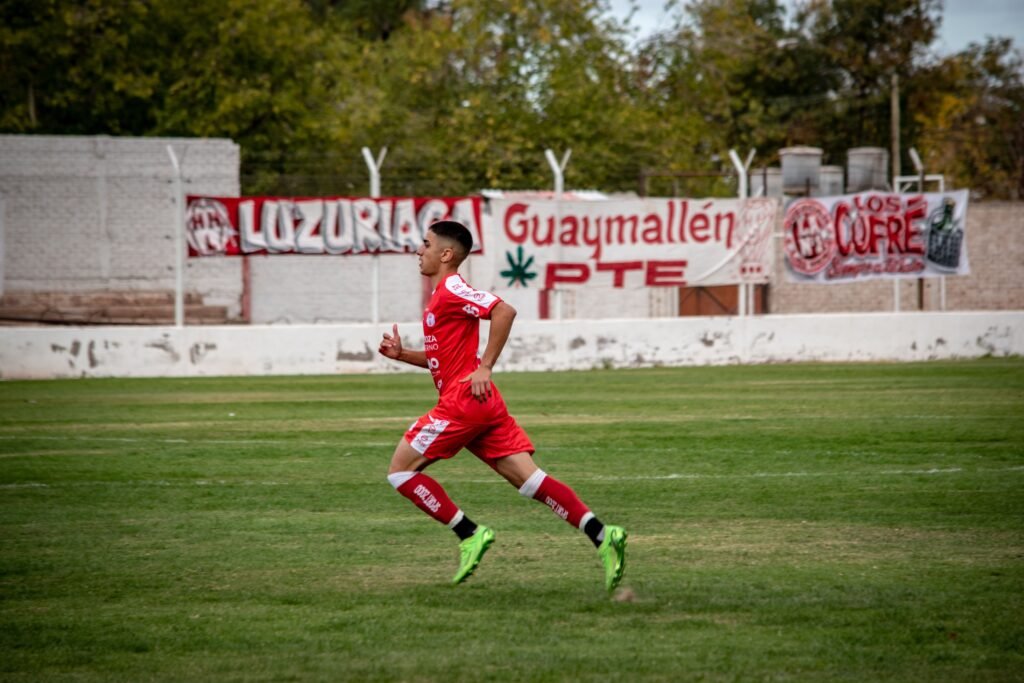
This is where massage guns can fit particularly well into a footballer’s routine.
Football involves repeated sprinting, accelerations, decelerations, changes of direction and high volumes of lower-body work. After a match or hard training session, a massage gun can be a convenient way to temporarily reduce the sensation of muscular tightness.
For example, a player might use one on the:
- Quadriceps
- Hamstrings
- Calves
- Glutes
However, it shouldn’t replace the fundamentals of recovery.
For a footballer, I’d put these ahead of buying a massage gun:
- Adequate sleep
- Appropriate nutrition
- Hydration
- Sensible training load
- Active recovery
- Injury management where necessary
Think of the massage gun as an addition to the recovery toolbox, not the toolbox itself.
Common Massage Gun Mistakes
Using the highest setting immediately
You don’t win points for tolerating the most aggressive setting.
Start gently and increase intensity only if it remains comfortable.
Holding it in one place for too long
A massage gun isn’t designed to hammer one spot indefinitely.
Keep it moving over the muscle.
Using it directly on bones
Massage guns are intended for soft tissue. Avoid running them directly over bony areas such as the spine or joints. Cleveland Clinic also recommends avoiding bony areas and limiting use on individual muscle groups rather than spending excessive time on one area.
Assuming pain means it’s working
It doesn’t.
If using a massage gun hurts, reduce the intensity, pressure or duration — or stop.
Using it to treat an injury
A massage gun shouldn’t be used as a substitute for proper assessment of an injury.
If you’ve suffered a significant injury or you’re unsure what’s causing your pain, get appropriate medical or physiotherapy advice.
Are Massage Guns Safe?
For most healthy people, massage guns can be used safely when used appropriately.
However, they’re not suitable for every situation.
Avoid using a massage gun directly over:
- Bones and joints
- Open wounds
- Recently injured areas
- Areas of significant swelling
- Areas where you have unexplained pain
If you have an underlying medical condition, are recovering from an injury, take blood-thinning medication or have a history of blood clots, speak to an appropriate healthcare professional before using one. Massage therapy guidance from Cleveland Clinic specifically flags conditions including DVT, osteoporosis, blood-thinning medication and certain medical conditions as situations where professional advice may be appropriate.
This article is for general information and isn’t a substitute for individual medical advice.
FAQs
Are massage guns worth buying?
They can be, particularly if you enjoy using them and want a convenient way to incorporate percussive therapy into your recovery routine. Evidence suggests potential short-term benefits for flexibility, range of motion and some recovery measures, but massage guns shouldn’t be viewed as a replacement for the fundamentals of recovery.
How often should you use a massage gun?
There’s no universally established ideal frequency or duration. Start with short, comfortable sessions and follow the instructions supplied with your particular device.
Can you use a massage gun every day?
For many healthy people, light use may be reasonable, but more isn’t necessarily better. Avoid repeatedly hammering the same area, particularly if it becomes painful or irritated.
Can massage guns help with muscle soreness?
They may help with the sensation of stiffness and soreness and can improve some short-term recovery-related outcomes. However, the research is still developing and shouldn’t be interpreted as proof that massage guns accelerate every aspect of muscle recovery.
Should you use a massage gun before or after exercise?
It can be used in either situation, depending on your goal. Research suggests potential short-term improvements in range of motion, while evidence for improving explosive performance is less convincing.
What massage gun attachment should I use?
A larger, softer ball-style attachment is a sensible starting point for larger muscle groups. More pointed attachments can feel considerably more intense, so beginners should use them cautiously and avoid sensitive or bony areas.
Are expensive massage guns better?
Not necessarily.
More expensive models often provide additional features, build quality, battery capacity or more refined controls, but that doesn’t automatically mean they provide proportionally better recovery results.
Your best choice depends on how often you’ll use the device and what features actually matter to you.
Our Verdict
After comparing the three options, there’s a clear reason to consider each one.
🏆 Best Overall — RENPHO
The best choice for someone who expects to use a massage gun regularly and wants a more feature-rich device.
🎒 Best Portable — Compact 10-Head Massage Gun
The pick for anyone who wants something convenient to carry to the gym, work or while travelling.
💷 Best Budget — Cotsoco Mini Massage Gun
The sensible starting point for anyone who wants to experiment with massage guns without spending much money.
Check the latest Cotsoco price
Ultimately, the best massage gun isn’t necessarily the one with the most speeds, the most attachment heads or the highest price.
It’s the one that fits your budget, is comfortable to use and actually becomes part of your recovery routine.
And that’s perhaps the most important point: a massage gun can complement good recovery habits, but it can’t replace them.
Related Grassroots Pro Guides
Exercises for Patellar Tendonitis: A Footballer’s Guide to Recovery
Creatine for Soccer Players: Benefits, Dosage and How It Works
Electrolyte Drinks for Athletes: What to Look For & Best Options
Best Supplements Vitamin D: What to Look For and Which Ones Are Worth Considering
Best MCL Knee Support for Footballers (2026): Braces, Sleeves & Supports Compared
Affiliate Disclosure
Some links in this article are affiliate links. If you purchase a product after clicking one of these links, The Grassroots Pro may receive a commission at no additional cost to you. Our recommendations are based on the characteristics and intended use of the products, not solely on affiliate commission potential.
Product prices, specifications, availability and customer ratings can change. Check the retailer’s current listing before purchasing.