

Training hard means sweating, and sweating means losing both fluid and electrolytes.
But does every athlete actually need an electrolyte drink?
Not necessarily.
For shorter or lower-intensity sessions, normal food and water may be perfectly adequate. Electrolyte products become more interesting when you’re exercising for longer periods, training intensely, sweating heavily or exercising in hot conditions.
That’s particularly relevant to footballers, runners, cyclists and other athletes who regularly spend extended periods training or competing.
In this guide, we’ll explain when electrolyte drinks for athletes are actually useful, what to look for when choosing one and how several options from Bulk compare.
Affiliate disclosure: Some of the products mentioned in this article are available through affiliate links. If you purchase through one of our links, we may earn a commission at no additional cost to you.
What Are Electrolytes?
Electrolytes are minerals that carry an electrical charge in the body.
The most relevant electrolytes for exercise and hydration include:
- Sodium
- Potassium
- Magnesium
- Calcium
- Chloride
They play important roles in processes including fluid balance, nerve signalling and normal muscle function.
The important point for athletes is that you lose electrolytes in sweat, although the amount varies considerably between individuals.
This is one reason there isn’t a single perfect electrolyte drink for everyone.
Someone training for 45 minutes in cool conditions may have very different hydration requirements from an athlete completing a two-hour session in hot weather.
Do Athletes Actually Need Electrolyte Drinks?

This is where electrolyte marketing can sometimes get ahead of the science.
You don’t automatically need an electrolyte supplement just because you’ve exercised.
For many everyday workouts, water and a normal balanced diet are sufficient.
Electrolyte drinks become more useful when fluid and sodium losses through sweating are substantial—for example during prolonged or intense exercise, heavy sweating or hot conditions. Exercise hydration guidance also emphasises that fluid requirements depend on factors such as exercise duration, individual sweat rate and environmental conditions.
That means an electrolyte drink should be viewed as a tool, rather than something every athlete needs to consume every day.
When Are Electrolyte Drinks Most Useful?
Long Training Sessions
The longer you exercise, the more opportunity there is to lose fluid and electrolytes through sweat.
This is particularly relevant to endurance athletes and long training sessions.
Hot Weather
Heat can increase sweat losses, making hydration more challenging.
For footballers, this can become particularly relevant during summer training, tournaments or matches played in warm conditions.
Heavy Sweaters
Some athletes naturally lose considerably more sweat than others.
If you finish training with your clothing noticeably soaked in sweat, your requirements may be different from somebody who barely perspires.
Multiple Sessions or Matches
Electrolytes can also become more relevant when you’re exercising repeatedly without much time to recover.
Think:
Match → recovery → second match
or
Morning training → afternoon training
Long Cardio Sessions
Runners, cyclists and other endurance athletes may have greater reasons to consider carbohydrate-electrolyte drinks during prolonged sessions.
Electrolyte Drinks vs Water
Water remains the foundation of hydration.
An electrolyte drink isn’t automatically “better” than water.
Instead, think about what you’re trying to replace.
Water:
Provides fluid.
Electrolyte drink:
Provides fluid plus minerals such as sodium and potassium.
Carbohydrate-electrolyte drink:
Provides fluid, electrolytes and carbohydrate.
That final category can be particularly useful when an athlete needs both hydration and fuel during longer sessions.
This distinction is important when comparing products.
What Should You Look For in an Electrolyte Drink?
Don’t simply choose the product with the longest ingredient list.
Look at:
Sodium
Sodium is particularly important because it is a major electrolyte lost through sweat.
Other electrolytes
Potassium, magnesium and other minerals can also be included.
Carbohydrates
If you’re exercising for a long period, carbohydrate can provide useful energy as well as hydration.
If you’re simply looking for a low-calorie hydration product, however, you may prefer an electrolyte powder without a significant carbohydrate content.
Serving size
Always compare products per serving, rather than just looking at the front of the packet.
Convenience
A large tub may offer better value for regular use, while sachets are considerably easier to take to training.
Taste
It sounds obvious, but it’s important.
The best electrolyte drink is not particularly useful if you don’t enjoy drinking it.
Bulk Electrolyte Products: Which Is Best?
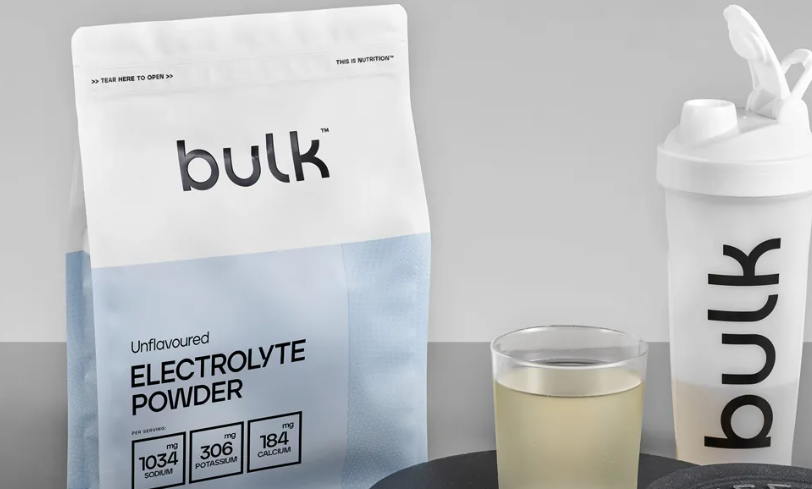
| Product | Best suited to | Main advantage |
|---|---|---|
| Bulk Electrolyte Powder | Regular training | Straightforward electrolyte supplementation |
| Bulk Hydration Drink | Long/harder sessions | Electrolytes + 35g carbohydrate per serving |
| Bulk Electrolyte Sachets | Training on the go | Convenience |
| Bulk Electrolyte Plus | Longer/harder sessions | Higher-sodium electrolyte formula |
| Bulk Creatine & Electrolytes | Athletes already using creatine | Combines creatine with electrolytes |
1. Bulk Electrolyte Powder
Best for: Regular training and straightforward hydration
Bulk’s Electrolyte Powder is the simplest option of the products you’re looking at.
The current product is available in several sizes and flavours, including unflavoured, and is designed around three key electrolytes. Bulk currently lists it as suitable for use during and after workouts.
Why we’d consider it
It’s a sensible option if you want:
- A straightforward electrolyte product
- Something for regular training
- A larger tub rather than individual sachets
- Different flavour choices
- Something without the emphasis on carbohydrate found in the Hydration Drink
Best suited to: footballers, gym-goers and athletes who want a simple electrolyte product for training.
👉 Check Bulk Electrolyte Powder
2. Bulk Hydration Drink
Best for: Longer sessions where you also need carbohydrate
This is a different proposition.
Bulk’s Hydration Drink provides 35g of carbohydrate per serving, alongside electrolytes, BCAAs and vitamin B6. Bulk positions it for longer cardio sessions and lists a carbohydrate blend including maltodextrin, dextrose and fructose.
That makes it more than simply an electrolyte supplement.
It’s effectively trying to address:
Fluid + electrolytes + energy
When does that make sense?
Consider a long:
- Cycling session
- Running session
- Training camp
- Tournament
- High-volume training day
For a standard 60-minute football training session, however, you may not need the additional carbohydrate.
Best suited to: athletes undertaking longer sessions where energy as well as hydration is a consideration.
3. Bulk Electrolyte Sachets
Best for: Convenience
This is probably the easiest product to recommend to athletes who are constantly travelling to training.
The sachets come in a box of 30 and are designed to be mixed with water. Bulk specifically markets them towards high-intensity cardio, endurance sessions and situations where convenience matters.
For a footballer, the appeal is obvious:
Put a few sachets in your kit bag and forget about them until you need them.
You don’t need to carry a large tub of powder around.
Best suited to:
- Football training
- Match days
- Travel
- Running
- Cycling
- Athletes who train away from home
👉 Check Bulk Electrolyte Sachets
4. Bulk Electrolyte Plus
Best for: Athletes specifically looking for a higher-sodium formula
This is the more advanced electrolyte option in the range.
Bulk lists 500mg of sodium alongside potassium and magnesium, with 30- and 60-serving options.
This makes it particularly interesting for athletes who:
- Sweat heavily
- Train for longer periods
- Exercise in hot conditions
- Have higher individual sodium losses
But more sodium doesn’t automatically mean better.
If you’re doing a relatively short training session in cool conditions, you may have little reason to choose a high-sodium formula.
Best suited to: longer, harder sessions and athletes with substantial sweat losses.
5. Bulk Creatine & Electrolytes
Best for: Athletes who already want creatine and electrolytes in one product
The fifth product in your range is slightly different.
It’s a combination product containing both creatine and electrolytes.
That could be convenient for someone already taking creatine and looking to combine their routine.
However, I’d avoid presenting this as automatically superior to taking the two products separately.
The better choice depends on what the athlete actually needs.
If you’re interested specifically in creatine for football, we’ve already covered the subject in more detail in:
[Creatine for Soccer Players: Benefits, Dosage and How It Works]
and:
[Best Creatine for Soccer Players: Bulk vs MyProtein vs 4 Him & Her]
👉 Check Bulk Creatine & Electrolytes
Which Bulk Electrolyte Product Should You Choose?

If you’re unsure, I’d simplify the decision.
🏃 Regular training
Electrolyte Powder
A straightforward option when you want electrolytes without making your hydration routine unnecessarily complicated.
🚴 Long training + energy requirements
Hydration Drink
The better fit when carbohydrate and electrolytes are both useful.
⚽ Training on the go
Electrolyte Sachets
The convenience winner.
🥵 Heavy sweating / hot conditions
Electrolyte Plus
The higher-sodium option may make more sense when sweat losses are substantial.
💪 Already taking creatine
Creatine & Electrolytes
Potentially convenient if you want both in one product.
What About Footballers?

This is where the subject becomes particularly relevant to The Grassroots Pro.
Football isn’t normally an endurance sport in the traditional sense, but matches and training involve repeated high-intensity activity.
For a normal 90-minute match, hydration should be planned around the individual, the weather, sweat rate and access to fluids, rather than assuming that every player needs a specific electrolyte supplement.
For example:
Sunday league match in cool weather
Water may be perfectly adequate for many players.
Summer tournament
Electrolytes become more interesting because of the heat, sweat losses and repeated matches.
Two-hour intense training session
An electrolyte product may be more useful, particularly for a heavy sweater.
Match + second match
Hydration and electrolyte replacement become more important because recovery time is limited.
This is why we wouldn’t recommend simply drinking an electrolyte product every day regardless of circumstances.
Are Electrolyte Drinks Better Than Sports Drinks?
Not necessarily.
The biggest difference is usually what the drink is designed to provide.
An electrolyte drink can focus primarily on fluids and minerals.
A traditional sports drink may provide:
Fluid + electrolytes + carbohydrates
That carbohydrate can be useful during prolonged exercise where fuelling becomes important.
This is why Bulk’s Hydration Drink is quite different from its standard Electrolyte Powder.
The right product depends on what you’re trying to achieve.
Common Mistakes When Using Electrolytes
Taking Them When You Don’t Need Them
An electrolyte drink isn’t automatically necessary for a short gym session.
Assuming More Sodium Is Always Better
Higher sodium can be useful in some circumstances, but your requirements depend on sweat losses and the type of exercise you’re doing.
Forgetting About Water
Electrolytes don’t eliminate the need for adequate fluid intake.
Ignoring Your Diet
A balanced diet already supplies many electrolytes.
Choosing Based Only on Marketing
Look at the actual nutritional information rather than simply choosing the product with the most impressive packaging.
Using Them Every Day Without Thinking
Ask yourself:
How long am I training?
How much am I sweating?
What’s the weather like?
Do I need carbohydrate as well?
Those questions are more useful than simply asking whether you “should take electrolytes.”
Electrolytes and Recovery
Electrolytes aren’t a magic recovery supplement.
After training, your priorities should still include:
Fluids + carbohydrates + protein + overall nutrition + sleep
Electrolytes can form part of your hydration strategy, particularly after substantial sweat losses.
For more on the overall nutrition side, see:
[Soccer Player Diet: What to Eat Before, During & After Training]
Are Electrolyte Drinks Worth It?
For some athletes, absolutely.
For others, probably not.
If you’re exercising for a relatively short period in moderate conditions, water and normal food may be enough.
But if you’re regularly doing long, intense or sweaty sessions, an electrolyte drink can be a convenient way of replacing some of the minerals lost through sweat.
The important thing is to choose a product that matches the situation.
That’s why we prefer the idea of different products for different circumstances, rather than claiming that one electrolyte drink is universally the best.
FAQs
What are the best electrolyte drinks for athletes?
The best option depends on the athlete and the type of exercise. Look at sodium content, carbohydrate content, serving size and convenience rather than choosing solely on brand or price.
Do athletes need electrolyte drinks every day?
No. Many athletes can meet their electrolyte requirements through normal food and fluids. Electrolyte products become more relevant when exercise is prolonged, intense or involves substantial sweating.
Are electrolyte drinks good for footballers?
They can be useful in situations involving heavy sweating, hot weather, long training sessions or multiple matches. They aren’t necessarily required for every football session.
Are electrolyte drinks better than water?
Not universally. Water is an important part of hydration, while electrolyte drinks provide additional minerals. The right choice depends on exercise duration, sweat losses and conditions.
Do electrolyte drinks give you energy?
Only if they contain a meaningful amount of carbohydrate or another energy source. Electrolytes themselves aren’t a significant source of calories.
Should I take electrolytes before or after training?
It depends on your hydration needs and the type of session. They can be used before, during or after exercise depending on individual circumstances.
Are electrolyte drinks the same as sports drinks?
Not necessarily. Some electrolyte drinks primarily provide minerals and fluids, while sports drinks often combine fluids, electrolytes and carbohydrates.
Related Articles
Soccer Player Diet: What to Eat Before, During & After Training
Creatine for Soccer Players: Benefits, Dosage and How It Works
Best Creatine for Soccer Players: Bulk vs MyProtein vs 4 Him & Her
Strength Training for Football
Conclusion
Electrolyte drinks for athletes can be useful, but they’re not something every athlete needs for every workout.
The biggest factors are exercise duration, intensity, temperature and how much you sweat.
For shorter sessions, water and a balanced diet may be all you need. For longer or more demanding sessions, an electrolyte product can provide a convenient way to replace some of the minerals lost through sweat.
The Bulk range you’ve got access to is particularly useful because the products serve different purposes: the Electrolyte Powder is a straightforward option, Hydration Drink adds carbohydrate for longer sessions, Electrolyte Sachets prioritise convenience and Electrolyte Plus provides a higher-sodium formula.
The goal isn’t to find the product with the biggest numbers on the label.
It’s to find the product that actually matches your training.