
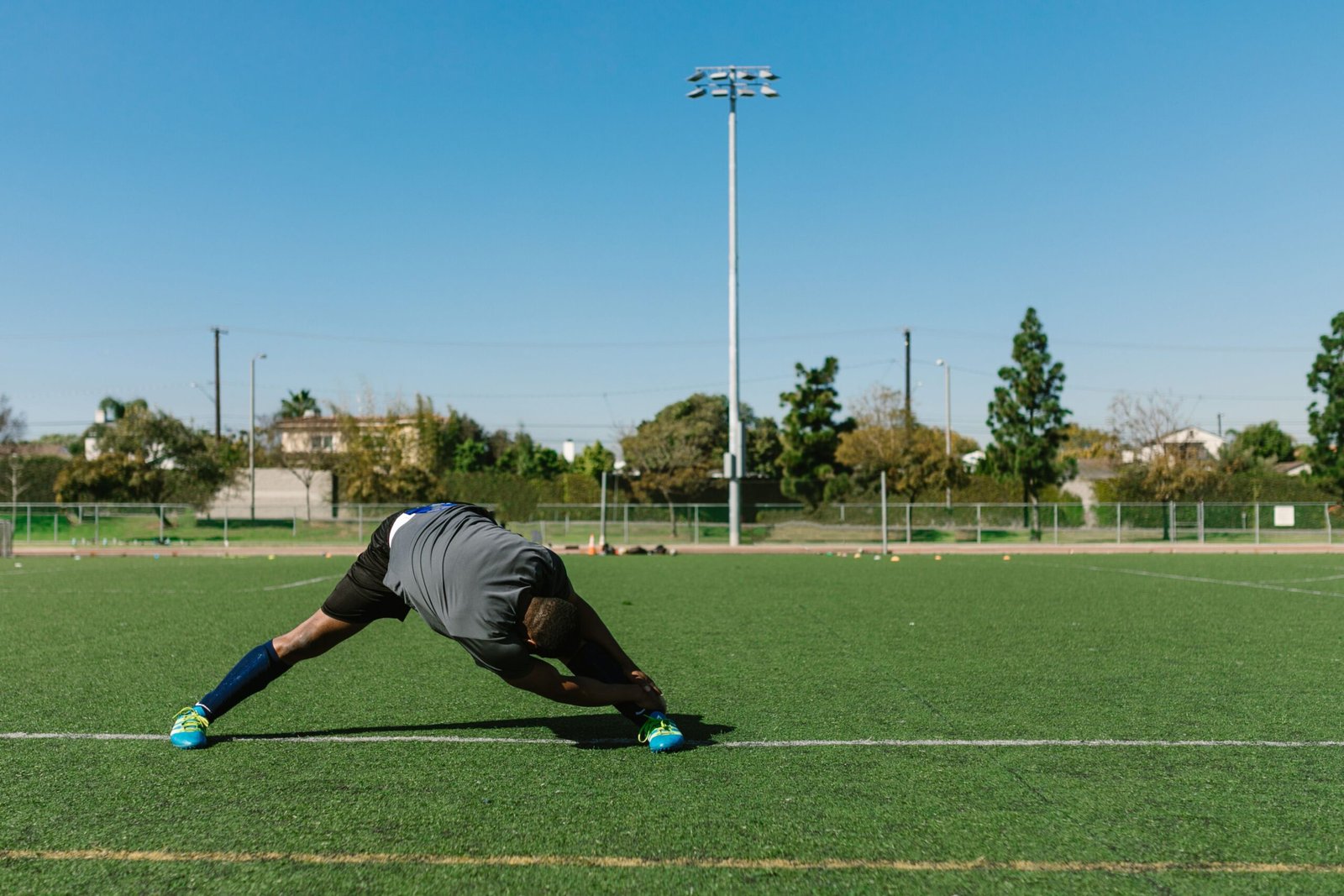
Hamstring Stretches for Footballers
If you’ve played football for long enough, there’s a good chance you’ve experienced that familiar feeling in the back of your thigh.
Maybe it happens when you stretch for a loose ball.
Maybe you notice it halfway through a sprint.
Or perhaps it’s the morning after a Saturday match when getting out of the car suddenly feels harder than it should.
The hamstrings do a lot of work during football. Sprinting, accelerating, changing direction and kicking all place demands on the muscles at the back of your thigh.
That’s why hamstring stretches can be a useful part of a footballer’s overall mobility and recovery routine.
And you don’t need to be a professional footballer with a personal physio to make them part of your week.
For the average amateur footballer balancing work, family, training and weekend matches, keeping things simple is usually the best approach.
Medical disclaimer: This article is for general educational information and is not a substitute for professional medical advice, diagnosis or treatment. If you have significant, sudden or persistent hamstring pain, swelling, bruising, weakness or difficulty walking, seek advice from an appropriate healthcare professional. Do not use stretching to try to “stretch out” an acute injury.
Why Are the Hamstrings Important in Football?
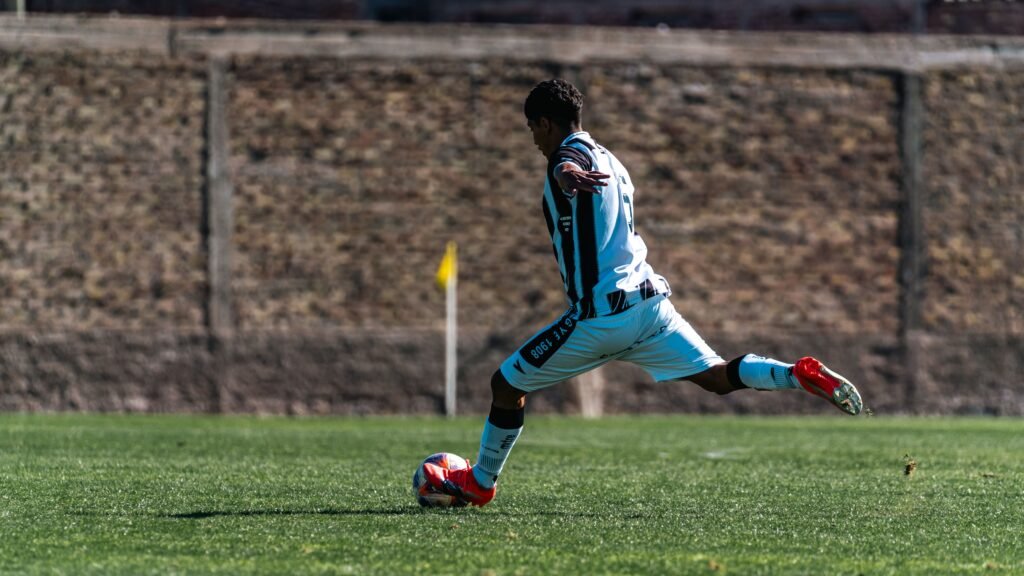
The hamstrings are a group of muscles located at the back of your thigh.
They play an important role in movements that footballers perform repeatedly, including running, sprinting and changing direction.
Think about a typical match.
You might spend several minutes jogging around before suddenly having to sprint 20 yards to close down a defender. A few minutes later you’re accelerating towards a through ball, then stopping and changing direction.
Your hamstrings are involved throughout all of this.
For amateur players, this can be particularly relevant because we don’t always have the same training consistency as professional footballers.
You might spend Monday to Friday sitting at a desk, then expect your body to cope with a full-intensity football match on Saturday afternoon.
That’s quite a jump in activity.
When Should You Do Hamstring Stretches?
This is where things can get confusing.
You don’t necessarily want to do long, aggressive static hamstring stretches immediately before sprinting.
Instead, think about using different approaches depending on when you’re stretching.
Before football
A dynamic warm-up is generally more appropriate before a match or intense training session.
This could include:
- Easy jogging
- Leg swings
- Walking lunges
- High knees
- Gradual accelerations
- Dynamic leg movements
The goal is to prepare your body for the movements you’re about to perform.
After football
Gentle static hamstring stretches can be included as part of a cool-down if they feel comfortable.
There’s no need to force your leg into an extreme position.
On rest days
A few gentle hamstring stretches can also form part of a general mobility routine.
This can be particularly useful if you’ve spent most of the day sitting at work.
7 Simple Hamstring Stretches for Footballers
You don’t need a complicated routine.
Here are seven simple hamstring stretches that can be incorporated into your week.
1. Standing Hamstring Stretch
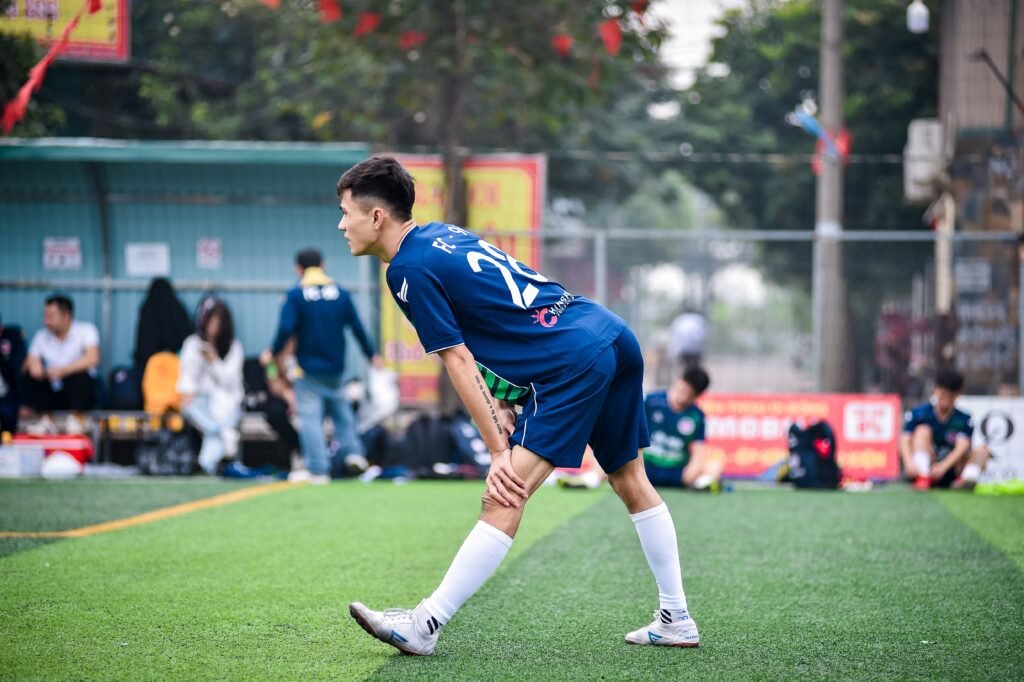
This is probably the stretch most people picture when they hear “hamstring stretches.”
Stand upright and place one foot slightly in front of the other.
Keep the front leg relatively straight while bending slightly through the supporting leg. Hinge forwards from your hips until you feel a gentle stretch along the back of your thigh.
Hold the position comfortably before switching sides.
Football tip
Don’t bounce or force yourself to touch your toes.
The aim is a controlled, comfortable stretch rather than seeing how far you can reach.
2. Seated Hamstring Stretch
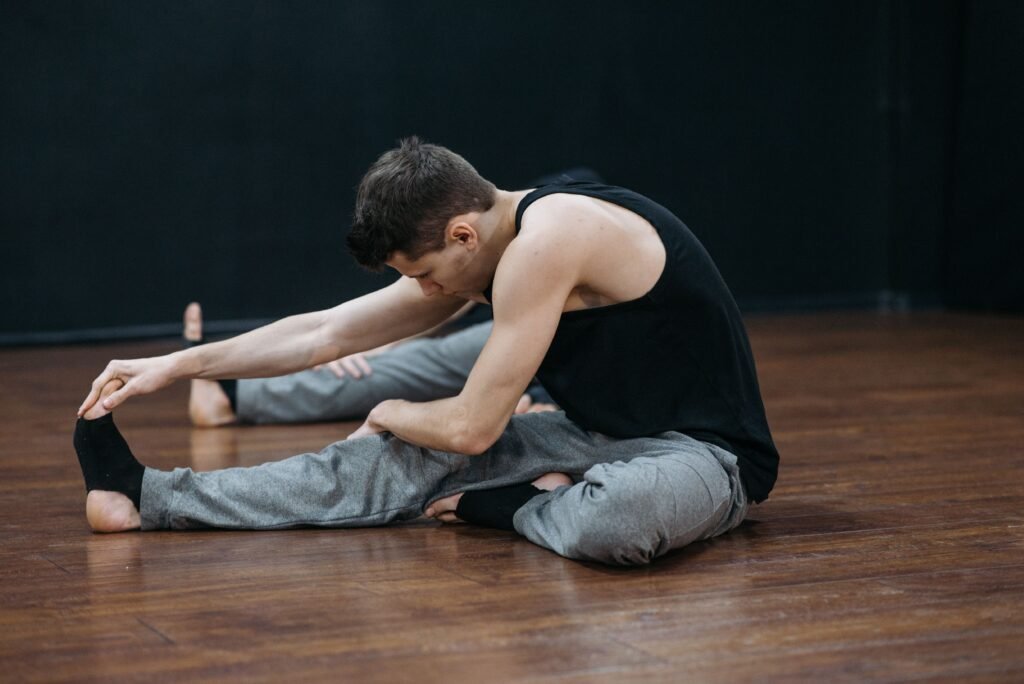
Sit on the floor with one leg extended and the other leg bent comfortably.
Keep your back relatively straight and slowly hinge forwards towards the extended leg.
You should feel the stretch along the back of the extended thigh.
Hold it gently before changing legs.
This is an easy one to do at home while you’re watching television or waiting for the kettle to boil.
And let’s be honest, those are probably the only circumstances in which most of us are going to find an extra 10 minutes for mobility.
3. Lying Hamstring Stretch
Lie on your back with both legs extended.
Lift one leg towards the ceiling while keeping the other leg relaxed.
You can hold behind the thigh and gently bring the leg towards you until you feel a comfortable stretch.
Keep the movement controlled.
This variation can be useful if standing or seated stretches aren’t comfortable for you.
4. Towel or Strap Hamstring Stretch
If reaching your leg comfortably is difficult, a towel or stretching strap can make things easier.
Lie on your back and place the towel around the foot of one leg.
Gently use the towel to assist as you raise the leg.
This allows you to control the movement without having to reach all the way to your foot.
A simple stretching strap can also be a relatively inexpensive addition to a home mobility routine.
5. Hamstring Stretch With a Raised Foot
Place one heel on a low, stable surface.
Keep the raised leg relatively straight and hinge forwards slightly from your hips.
You’ll feel the stretch towards the back of your thigh.
The important part here is stable and low.
You don’t need to put your foot on the kitchen table like you’re auditioning for a professional ballet company.
6. Dynamic Hamstring Sweep

This is better suited to a warm-up than a long static hold.
Take a small step forwards and place your heel down with your toes pointing upwards.
Keeping your back relatively straight, gently sweep your hands towards the foot before standing back up and stepping through.
Repeat on the other side.
The movement should be controlled rather than aggressive.
It’s a useful way to get your legs moving before progressing towards more demanding football movements.
7. Walking Hamstring Stretch
Take a step forwards and extend one leg slightly with the heel contacting the floor.
Gently hinge forwards, then step through and repeat on the opposite side.
This turns the stretch into a gentle moving drill rather than holding one position.
It can work nicely as part of a wider football warm-up.
How Long Should You Hold Hamstring Stretches?
There’s no need to turn a simple stretch into an endurance event.
For general flexibility work, you can use comfortable static holds and repeat them as appropriate for your routine.
A practical starting point is around 15–30 seconds per side, focusing on a gentle sensation rather than pain.
You shouldn’t be trying to force your hamstrings further every time you stretch.
Consistency matters more.
Doing a few minutes of sensible mobility several times a week is likely to be more realistic than doing one enormous stretching session once every three months.
Hamstring Stretches Before a Football Match
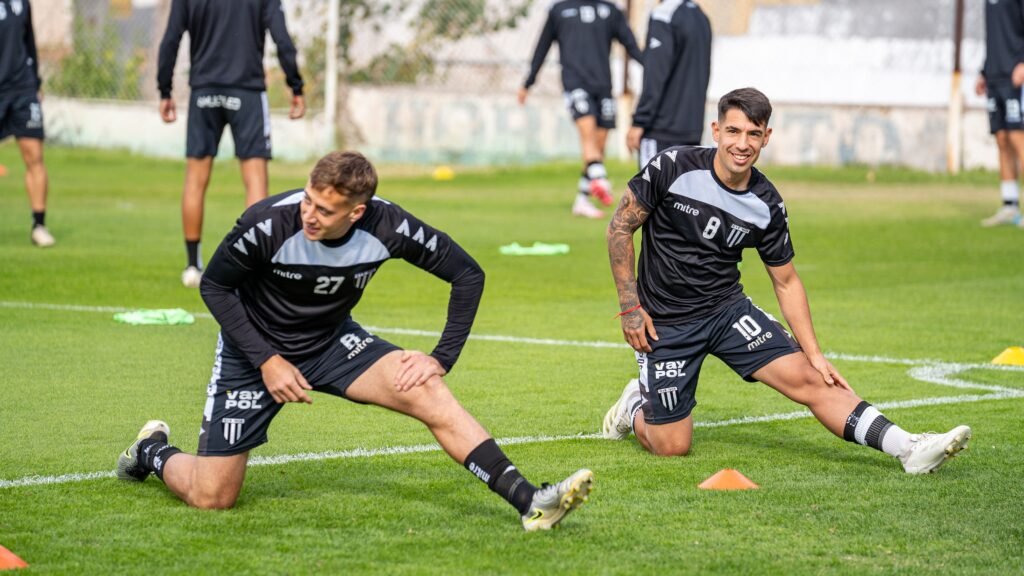
If you’re about to play football, don’t make your warm-up purely static stretching.
You want to gradually prepare your body for sprinting, changing direction and kicking.
A simple warm-up could look something like:
1. Easy jog
Start gently and gradually increase your pace.
2. Dynamic movements
Include movements such as leg swings, walking lunges and controlled high knees.
3. Gradual accelerations
Build your speed progressively rather than going from standing still to a full sprint.
4. Football-specific movements
Pass, move, change direction and gradually introduce the types of movements you’ll perform during the match.
This is particularly important for amateur footballers who may have spent the previous eight hours sitting at work.
Your first sprint of the day probably shouldn’t be chasing a striker who has just broken through your defensive line.
Hamstring Stretches After Football
After the match, your priorities should be recovery rather than trying to dramatically increase flexibility.
A gentle cool-down can include:
- Walking
- Light movement
- Gentle static stretching
- Hydration
- A suitable post-match meal
If your hamstrings feel tight after playing, some gentle hamstring stretches may feel comfortable.
But don’t assume that soreness automatically means you need to stretch harder.
Sometimes your body simply needs time to recover.
What If Your Hamstrings Feel Tight?
This is incredibly common among amateur footballers.
You finish a game and your hamstrings feel tight.
Your first thought might be:
“I need to stretch these out.”
Sometimes gentle movement or stretching can feel good.
But tightness can have different causes, and stretching isn’t always the answer.
It could be related to fatigue, training load, mobility, previous injury or simply doing more activity than you’re used to.
If the sensation is painful rather than simply tight, particularly if it came on suddenly during a sprint, don’t try to stretch aggressively through it.
That’s one situation where getting professional advice is much more sensible than searching for another hamstring stretch on Google.
Can Hamstring Stretches Prevent Injuries?
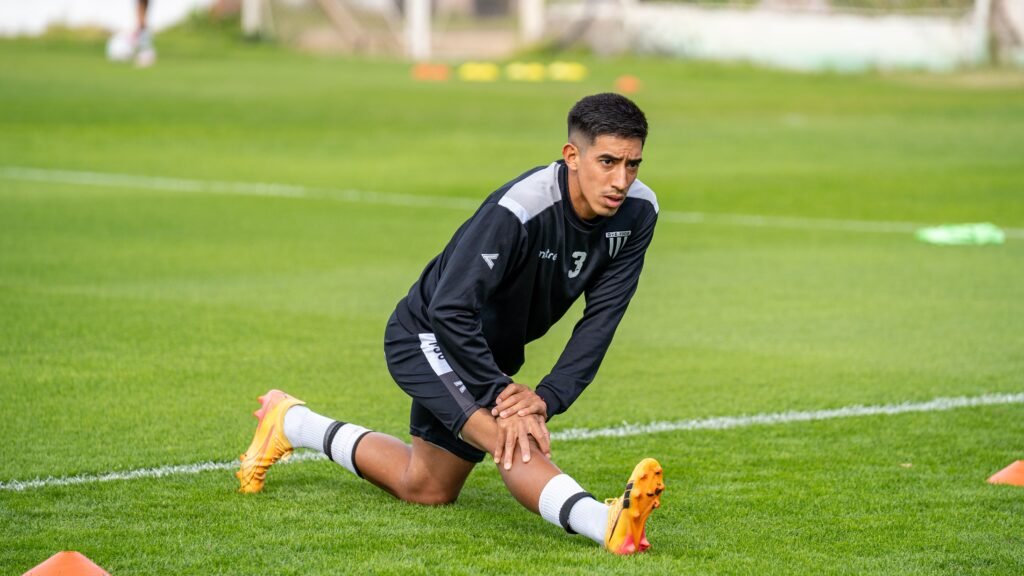
This is where it’s worth being careful.
It’s tempting to think:
“If I stretch my hamstrings every day, I’ll never pull one.”
Unfortunately, football injury prevention isn’t that simple.
Hamstring health involves much more than flexibility.
Your overall conditioning, strength, workload, previous injuries, warm-up habits and exposure to high-speed running can all matter.
That’s why a sensible football routine shouldn’t focus exclusively on hamstring stretches.
Strength and progressive conditioning deserve attention too.
For example, gradually exposing your body to faster running during training can be useful rather than going from very little activity straight into a maximum-effort sprint during a match.
Hamstring Stretches vs Hamstring Strength
One of the most important things for footballers to understand is that flexibility and strength aren’t the same thing.
You can have relatively flexible hamstrings and still lack the strength required for repeated high-speed football movements.
That’s why your wider training routine should ideally include appropriate strength work alongside mobility.
Exercises such as controlled hamstring strengthening movements can be useful, but if you’re new to strength training or have a history of hamstring problems, getting guidance from a qualified professional is worthwhile.
Think of it this way:
Stretching helps you work on mobility. Strength training helps you build capacity.
Football requires both.
Do You Need Equipment for Hamstring Stretches?
Not really.
You can perform most hamstring stretches with nothing more than some floor space.
However, a few simple products can make a home routine more convenient.
Stretching strap
A stretching strap can make lying hamstring stretches easier, particularly if you struggle to reach your foot.
Yoga or exercise mat
Not essential, but useful if you’re stretching on a hard floor.
Foam roller
Foam rollers are commonly used as part of warm-up and recovery routines. Some footballers like using them around their legs after training.
None of these are essential.
If you have ten minutes, a bit of floor space and the motivation to actually do the routine, you’ve already got most of what you need.
A Simple Hamstring Routine for Amateur Footballers
If you want something easy to remember, try this approach.
Before training or a match
5–10 minutes
- Easy jog
- Leg swings
- Walking lunges
- Dynamic hamstring movements
- Gradual accelerations
- Football-specific movements
After football
5 minutes
- Walk around and gradually cool down
- Gentle hamstring stretch
- Gentle quad stretch
- Gentle calf stretch
- Rehydrate
On a rest day
5–10 minutes
- Standing hamstring stretch
- Seated hamstring stretch
- Gentle mobility
- Optional foam rolling
That’s enough to get started.
You don’t need a 45-minute flexibility programme.
What I Wouldn’t Do
There are a few things I’d avoid when doing hamstring stretches.
Don’t bounce aggressively
Stretching shouldn’t involve repeatedly forcing your leg further.
Don’t stretch through sharp pain
A gentle pulling sensation is one thing. Sharp or worsening pain is another.
Don’t use stretching as a substitute for injury assessment
If you’ve injured your hamstring, stretching it aggressively isn’t a diagnosis or treatment plan.
Don’t forget strength
Flexibility is only one part of looking after your hamstrings.
Don’t suddenly increase your football workload
If you’ve spent the last month barely running and then decide to play 90 minutes at full intensity, stretching alone won’t prepare your body for that workload.
Final Thoughts
Hamstring stretches are simple, accessible and easy to include in a footballer’s routine.
For the average amateur player, that’s a big advantage.
You don’t need expensive equipment, a personal trainer or an hour of free time every evening.
A few minutes of sensible mobility before or after football can become a useful part of your overall routine.
But don’t fall into the trap of thinking that stretching is the complete answer to hamstring health.
Footballers need mobility, strength, conditioning, sensible training loads and adequate recovery.
And if you’re one of those players who spends Monday to Friday behind a desk before turning up on Saturday and expecting your legs to suddenly remember how to sprint, giving your hamstrings a little more attention is probably a good place to start.
Just remember: stretching should complement your football training, not replace it.
Medical disclaimer: The information in this article is intended for general educational purposes only and should not be considered medical advice. Hamstring injuries can vary considerably in severity. If you experience sudden pain, bruising, swelling, significant weakness, difficulty walking or persistent symptoms, stop exercising and seek assessment from a qualified healthcare professional. Do not attempt to diagnose or treat an injury based solely on this article.
Related Articles
Exercises for Patellar Tendonitis: A Footballer’s Guide to Recovery
MCL Strain Recovery: A Footballer’s Guide to Getting Back on the Pitch
Best MCL Knee Support for Footballers (2026): Braces, Sleeves & Supports Compared
Ruptured ACL: Recovery Time, Exercises & Returning to Football