You know the feeling.
The final whistle has gone. Your team has either scraped a 2–1 win or somehow thrown away a lead you thought was safe. You shake hands, grab your bag and head towards the changing room.
Then it hits you.
Your legs feel heavy. Your calves are tight. Your hamstrings are starting to complain and, after spending 90 minutes sprinting, stopping, turning and battling for the ball, the thought of doing it all again next weekend suddenly seems a long way away.
For grassroots footballers, recovery can sometimes be an afterthought. We turn up, play, shower, grab something to eat and get on with the rest of the weekend.
But what you do in the hours and days after a game can make a big difference to how you feel at the next one.
The good news is that effective football recovery doesn’t have to involve an expensive routine or a cupboard full of equipment. The fundamentals are surprisingly simple: replace what you’ve lost, allow your body to recover, get enough sleep and manage your workload.
This Football recovery guide explains how to build a practical football recovery routine that actually fits around normal life.
Why Recovery Matters for Footballers
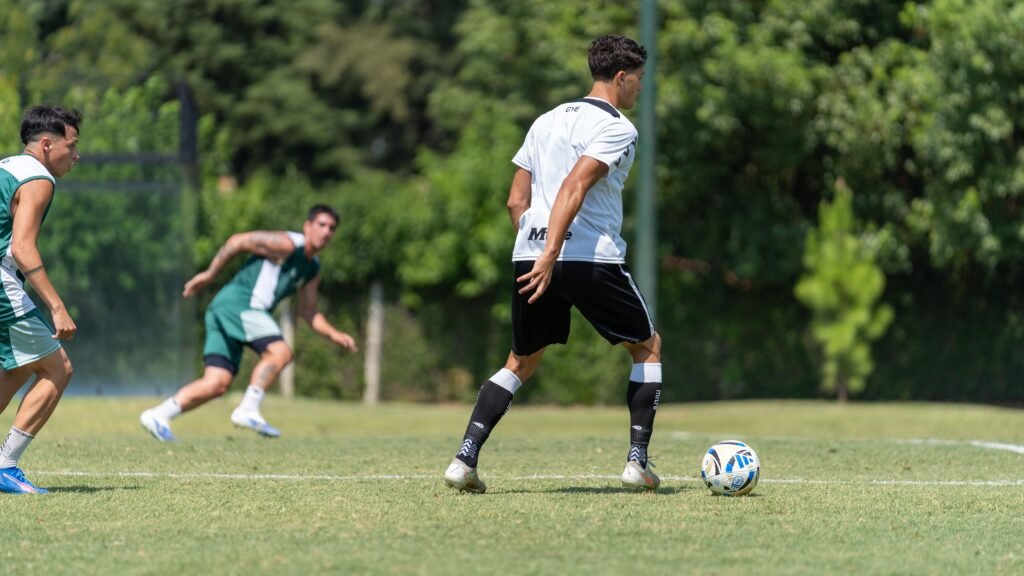
Football isn’t just running.
During a match, you’re constantly changing pace and direction. One minute you’re jogging back into position, the next you’re sprinting after a through ball. There are accelerations, decelerations, tackles, jumps and repeated efforts.
That combination puts considerable stress on your muscles and nervous system.
And unlike professional footballers, most grassroots players don’t have an entire medical and performance team waiting for them after the final whistle.
You might have work on Monday morning, children to look after, a commute, another training session during the week and a cup game waiting for you next Saturday.
That’s why recovery needs to be realistic.
The perfect recovery routine is useless if you can’t stick to it.
What Does Good Football Recovery Involve?
A good recovery routine can be broken down into several key areas:
- Hydration
- Nutrition
- Sleep
- Rest
- Light movement
- Mobility
- Managing your training load
- Looking after your mental wellbeing
None of these needs to be complicated.
In fact, the basics should come before any recovery gadget or advanced technique.
1. Start Recovering as Soon as the Game Ends
Your recovery doesn’t begin the following morning.
It starts when the match finishes.
After 90 minutes, you’ve probably lost fluid through sweat and used a considerable amount of energy. Your body also needs time to begin repairing the muscle damage and fatigue created by the game.
That doesn’t mean you need to sprint straight to the changing-room fridge for a specialist recovery drink.
Start with the basics.
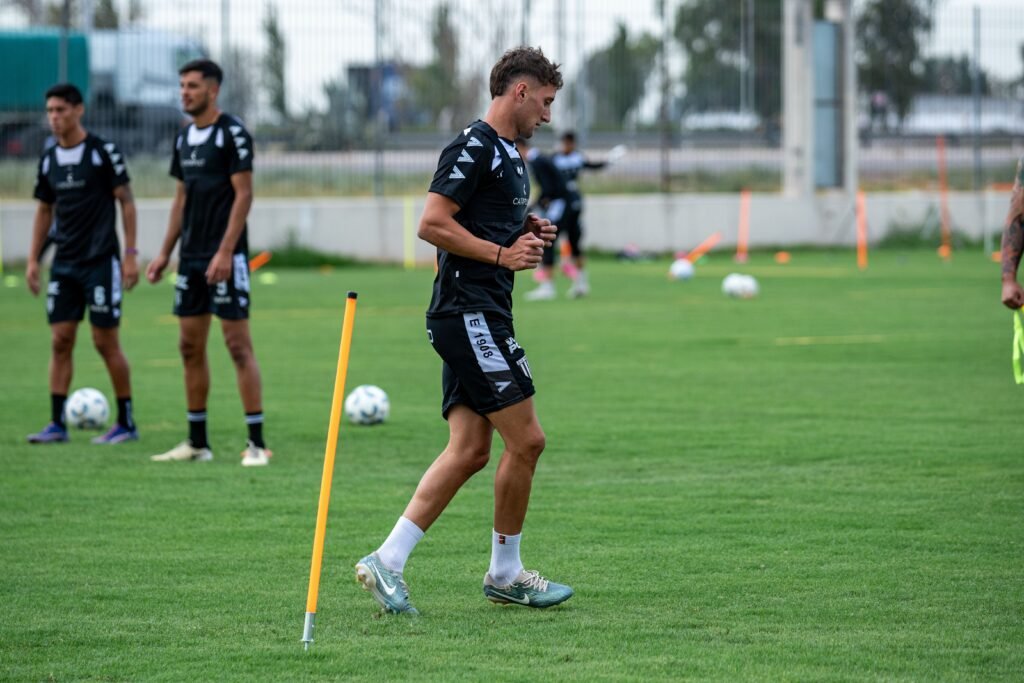
Cool down gradually
Rather than immediately sitting down for half an hour, spend a few minutes walking around and allowing your heart rate to come down naturally.
A short, easy walk around the pitch or changing-room area is enough.
You don’t need an elaborate 20-minute stretching session while everyone else is waiting for the shower.
Rehydrate
Replace the fluids you’ve lost during the match.
Water is usually a sensible starting point, while drinks containing electrolytes can also be useful, particularly if you’ve been sweating heavily or playing in hot conditions.
The important thing is not to ignore hydration until you wake up the next morning feeling like you’ve spent the night in the Sahara.
2. Eat After Playing Football
Nutrition is another major part of recovery.
After a game, your body needs nutrients to replenish energy stores and support muscle repair.
A useful post-match meal generally contains a combination of:
- Protein to support muscle repair
- Carbohydrates to replenish energy stores
- Fluids to replace what you’ve lost
- Fruit and vegetables to provide vitamins, minerals and other nutrients
It doesn’t have to be complicated.
Something as simple as chicken and rice, pasta with lean meat, eggs on toast or a balanced meal you’ve prepared at home can work perfectly well.
And yes, the post-match burger and chips might be calling your name.
Enjoying one occasionally isn’t going to ruin your recovery. But if every Saturday ends with three pints, a takeaway and a late night, your body probably isn’t getting the best opportunity to recover.
The goal is consistency rather than perfection.
3. Don’t Underestimate Sleep
If there is one part of recovery that is routinely overlooked, it’s sleep.
You can spend hundreds on recovery equipment, supplements and gadgets, but consistently poor sleep can undermine the rest of your routine.
Sleep gives your body time to recover physically while also helping with mental and cognitive recovery.
Think about how you feel after playing a match when you’ve had a good night’s sleep compared with turning up after staying awake until 2 a.m.
The difference can be enormous.
How much sleep should a footballer get?
There isn’t a magic number that works identically for everyone, but most adults should aim for around 7–9 hours of quality sleep per night.
For footballers, particularly during demanding periods of the season, getting towards the higher end may be beneficial.
A few simple habits can help:
- Keep a relatively consistent bedtime
- Make your bedroom cool, dark and comfortable
- Avoid excessive caffeine late in the day
- Give yourself time to wind down before bed
- Limit unnecessary screen time immediately before sleeping
The glamorous recovery routine might involve expensive equipment.
The boring one might involve going to bed earlier.
The boring one often wins.
4. The Day After a Match: Rest or Move?
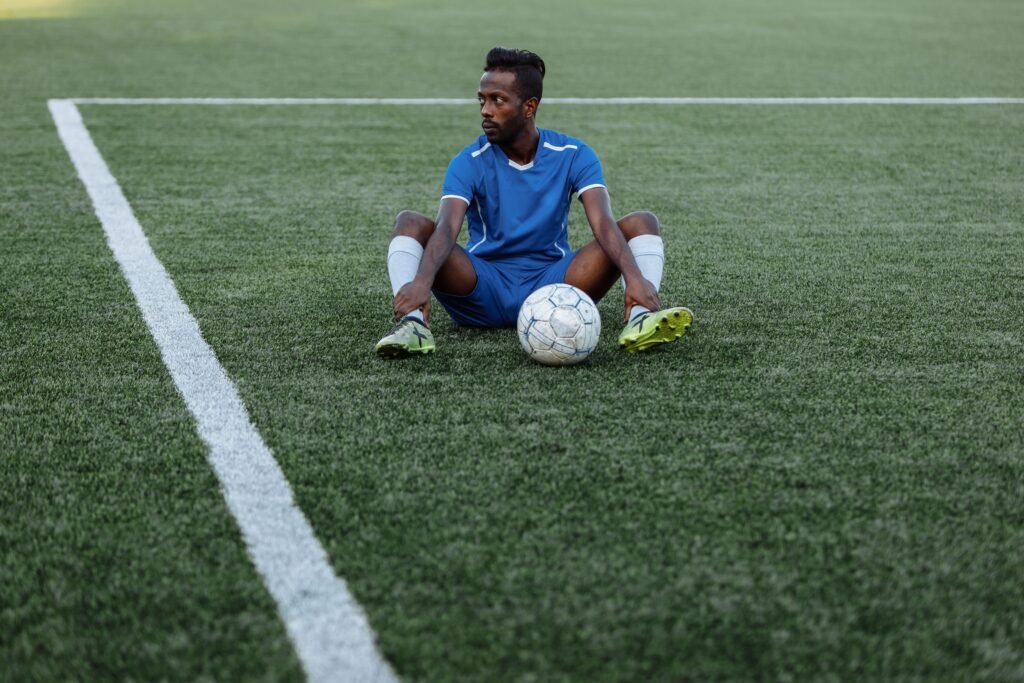
This is where many footballers get confused.
If your legs are sore, should you completely rest?
Not necessarily.
For many players, gentle movement can be more comfortable than spending the entire day sitting on the sofa.
That could mean:
- Going for an easy walk
- Gentle cycling
- Light mobility exercises
- Easy swimming
- Normal day-to-day movement
The key word is easy.
The day after a match probably isn’t the time to test your maximum squat, smash out hill sprints or attempt a new leg workout.
You’re recovering, not trying to win another match.
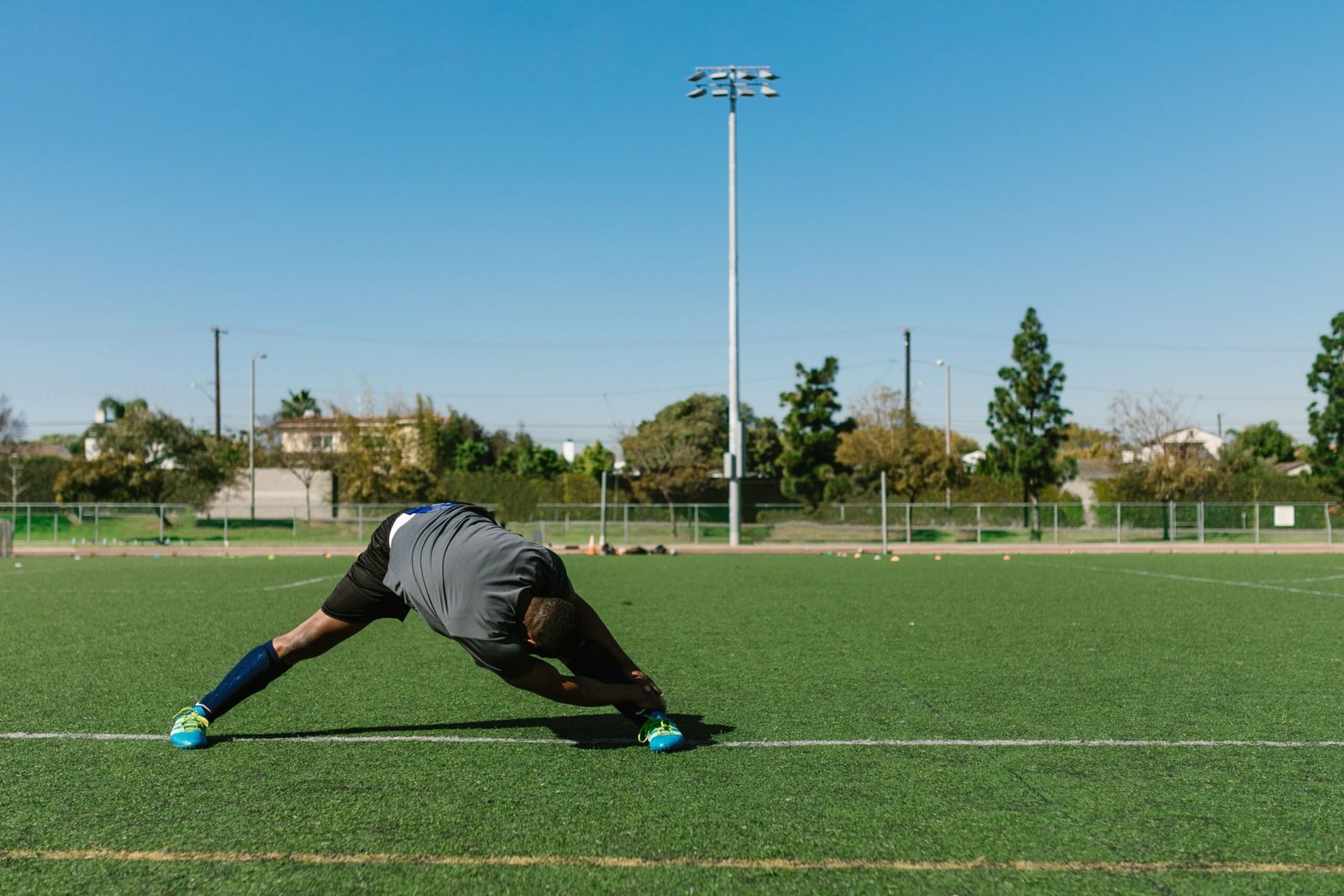
5. Mobility and Stretching
Mobility work can be useful for maintaining movement and helping you feel less stiff after playing.
You don’t need to spend an hour doing complicated stretches.
A short routine focusing on areas that tend to feel tight after football can be enough.
Common areas include:
- Calves
- Hamstrings
- Quadriceps
- Hip flexors
- Glutes
- Groin
Gentle mobility can be particularly useful the day after a match when you’ve got that familiar feeling of struggling to get down the stairs.
You know the one.
You played 90 minutes on Saturday and suddenly the journey downstairs on Sunday morning feels like a fitness test.
6. Foam Rolling and Self-Massage
Foam rolling and self-massage are popular recovery strategies among athletes.
They can be useful additions to a recovery routine, particularly if you enjoy using them and find that they help you feel more comfortable or mobile.
However, they shouldn’t replace the fundamentals.
Think of recovery equipment as an addition to your routine rather than the routine itself.
If you’re sleeping five hours, barely drinking water and skipping meals, buying the latest recovery gadget isn’t going to magically solve the problem.
Get the basics right first.
Then consider whether additional tools are worthwhile for you.
7. What About Ice Baths?
Ice baths have become increasingly common in football.
They can make your legs feel different after exercise and may help with short-term perceptions of soreness or fatigue in some circumstances.
But they aren’t essential for every grassroots footballer.
You don’t need to spend your Saturday evening sitting in a wheelie bin full of freezing water to recover properly.
For most players, priorities should remain:
Sleep → nutrition → hydration → sensible activity → workload management
before worrying about more advanced recovery methods.
8. Compression and Recovery Equipment
There is an ever-growing market for football recovery equipment.
You can now find everything from compression garments and massage guns to electrical stimulation devices and recovery boots.
Some players genuinely enjoy using them and find them useful.
Others will happily recover with a shower, decent meal and eight hours of sleep.
Neither approach is automatically wrong.
If you’re considering recovery equipment, ask yourself:
Does this help me recover, or do I just like the idea of having another piece of football kit?
That’s an important distinction.
The best recovery equipment is the equipment you’ll actually use consistently.
9. Manage Your Training Load
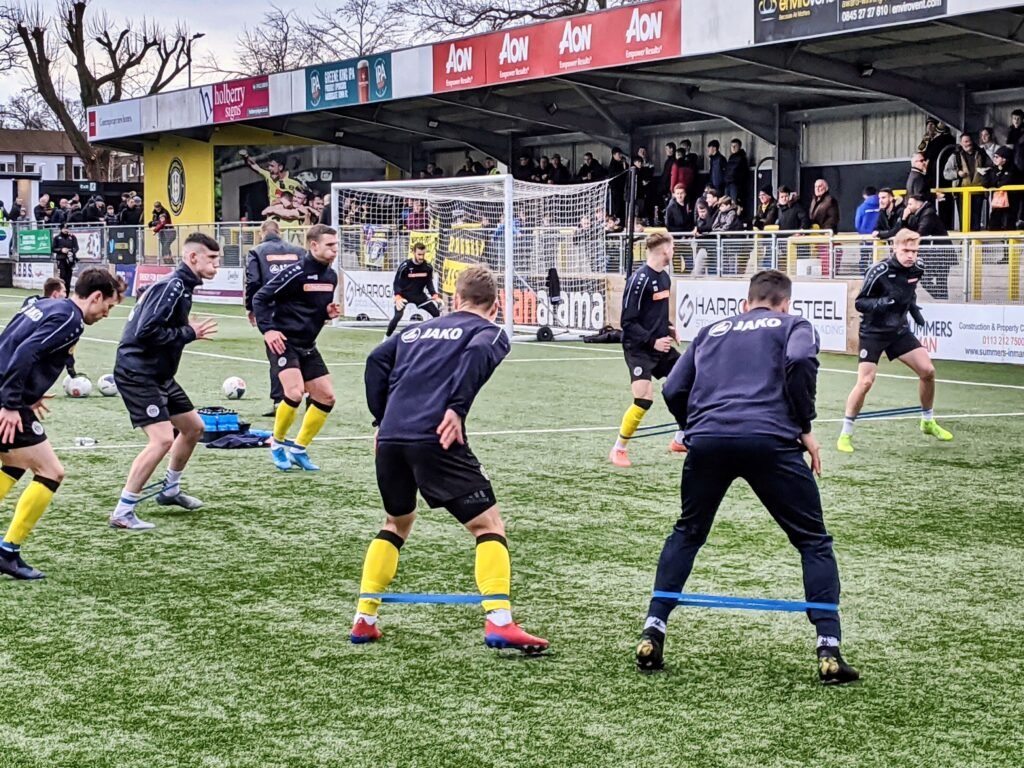
One of the biggest mistakes grassroots footballers make is treating every session as if it’s a final.
You might play 90 minutes on Saturday, train Tuesday, play five-a-side Wednesday and then wonder why your legs still feel heavy on Friday.
Your body doesn’t know that Wednesday’s five-a-side was “just a kickabout.”
It still counts.
Try to consider your overall weekly workload rather than looking at each session individually.
For example:
Saturday: Match
Sunday: Rest or gentle movement
Monday: Recovery / normal activity
Tuesday: Training
Wednesday: Rest
Thursday: Training
Friday: Light day
Saturday: Match
Your schedule will obviously vary, but the principle is important:
You need hard days and easier days.
Constantly training hard doesn’t necessarily mean you’re improving faster.
10. Listen to Your Body
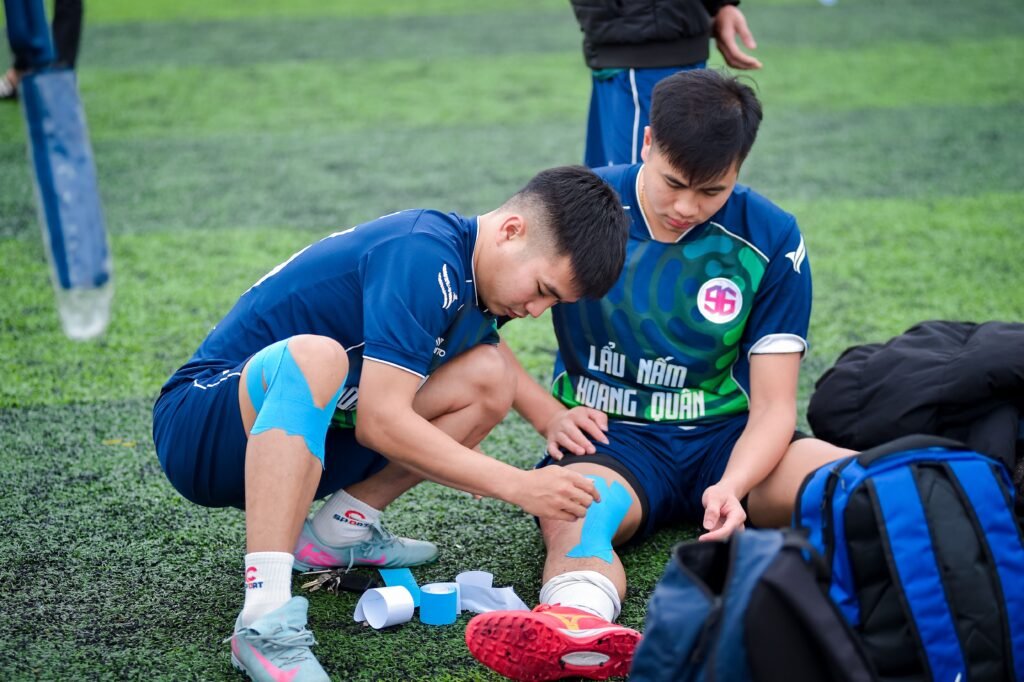
There’s a difference between normal post-match soreness and an injury.
Being stiff after playing a hard match isn’t unusual.
However, persistent or worsening pain, significant swelling, instability, loss of movement or pain that doesn’t settle should not simply be ignored because “it’s only Sunday.”
If something doesn’t feel right, get appropriate advice from a qualified healthcare professional.
Trying to play through an injury can turn a small problem into a much bigger one.
That weekend fixture isn’t worth several months on the sidelines.
11. Don’t Forget Mental Recovery
Football recovery isn’t purely physical.
A bad performance can stay in your head long after the soreness in your legs disappears.
Maybe you missed a one-on-one.
Maybe you gave the ball away for the goal.
Maybe the manager took you off.
Or perhaps you simply had one of those games where absolutely nothing seemed to work.
It’s easy to replay those moments over and over.
Try to separate performance from identity.
Having a bad game doesn’t make you a bad footballer.
Likewise, having a great game doesn’t mean you’re suddenly the next world-class midfielder.
Take the useful lessons from the match, then move on.
Football is played again next week.
A Simple Post-Match Recovery Routine
If you don’t want to overcomplicate things, start here.
Immediately after the match
- Walk around and cool down gradually
- Drink fluids
- Have a balanced meal or snack
- Change out of wet or uncomfortable clothing
- Give yourself time to relax
That evening
- Eat a proper meal
- Continue hydrating
- Gentle mobility if you feel stiff
- Avoid turning recovery into another workout
- Get a good night’s sleep
The following day
- Go for an easy walk
- Perform gentle mobility
- Eat normally and stay hydrated
- Avoid unnecessary high-intensity exercise
- Pay attention to how your body feels
During the week
- Gradually return to normal training
- Don’t ignore persistent pain
- Consider your total workload
- Prioritise sleep
- Prepare properly for the next match
Simple beats complicated when it comes to consistency.
The 80/20 of Football Recovery
If you remember nothing else from this guide, remember this.
You probably don’t need the perfect recovery routine.
You need a good routine that you actually follow.
Focus on these five things:
1. Sleep well
Give your body enough time to recover.
2. Eat properly
Give yourself enough energy and nutrients to support recovery.
3. Stay hydrated
Replace fluids lost during training and matches.
4. Keep moving
Gentle movement can be preferable to complete inactivity when you’re simply stiff and tired.
5. Manage your workload
Don’t try to train at maximum intensity every day.
Everything else is secondary.
How Long Does Football Recovery Take?
There’s no single recovery time that applies to every footballer.
It depends on factors such as:
- Match intensity
- Your fitness level
- Your age
- Training experience
- Sleep
- Nutrition
- Previous injuries
- Your overall workload
- How much recovery time you have between matches
You might feel reasonably fresh the morning after one match and completely exhausted after another.
That’s normal.
A particularly intense 90 minutes in difficult conditions can leave you feeling different from a relatively comfortable game where your team dominated possession.
Pay attention to patterns over time.
If you repeatedly feel exhausted going into your next match, your recovery strategy or overall workload may need some attention.
Your Recovery Doesn’t Need to Be Perfect
Footballers can easily fall into the trap of thinking recovery has to be complicated.
It doesn’t.
You don’t need to copy the routine of a Premier League player to recover effectively from Sunday League football.
You don’t need a cryotherapy chamber in your garage.
You don’t need ten different supplements.
And you certainly don’t need to feel guilty because you didn’t spend 30 minutes foam rolling after a game.
Start with the fundamentals.
Eat well. Drink enough. Sleep properly. Move gently when appropriate. Give yourself time to recover. Manage how much football you’re asking your body to handle.
Then, if you want to experiment with additional recovery methods, introduce them one at a time and see what actually works for you.
Because ultimately, the goal of recovery isn’t to have the most impressive routine.
It’s to turn up next weekend feeling ready to play football again.
And for most of us, that’s what it’s all about.
Related articles
Ruptured ACL: Recovery Time, Exercises & Returning to Football
Best MCL Knee Support for Footballers (2026): Braces, Sleeves & Supports Compared
MCL Strain Recovery: A Footballer’s Guide to Getting Back on the Pitch
Best Patellar Tendonitis Bands and Knee Supports for Footballers (2026)