
Patellar tendonitis, often called jumper’s knee, is one of the most common overuse injuries in football. Sprinting, kicking, jumping and sudden changes of direction all place repeated stress on the patellar tendon, making proper rehabilitation essential.
The good news is that evidence suggests the right exercise programme can reduce pain, improve tendon strength and help footballers return to play safely. Lets check the best exercises for Patellar Tendonitis below.
Quick Answer
The best exercises for patellar tendonitis include:
- Isometric wall sits
- Spanish squats
- Decline squats
- Step-downs
- Single-leg Romanian deadlifts
- Heavy slow resistance exercises
- Calf strengthening
- Hip strengthening
Progress gradually and avoid pushing through severe pain.
Table of Contents
- Why rehabilitation matters
- Best exercises
- Progression plan
- Common mistakes
- Recommended recovery products
- Scientific evidence
- FAQs
Why This Matters
Unlike a muscle strain, tendons adapt slowly.
Simply resting until the pain disappears often leads to symptoms returning as soon as football resumes.
A progressive loading programme encourages the tendon to remodel and become stronger over time.
Step-by-Step Guide
Step 1 – Reduce pain
Focus on reducing irritation.
Good exercises include:
- Wall sits
- Spanish squats
- Isometric leg press
Aim for five 45-second holds.
Pain during exercise should remain manageable (around 3–4/10).
Step 2 – Build strength
Once pain settles, begin strengthening.
Include:
- Decline squats
- Bulgarian split squats
- Single-leg squats
- Romanian deadlifts
- Step-downs
Perform slow, controlled repetitions.
Step 3 – Return to football
When daily activities become pain free, introduce:
- Jogging
- Acceleration drills
- Deceleration drills
- Jumping
- Cutting
- Small-sided games
Increase intensity gradually over several weeks.
Common Mistakes
❌ Returning too quickly
❌ Stretching only
❌ Ignoring hip and calf strength
❌ Stopping rehab once pain improves
❌ Training through severe pain
Recommended Tools & Products
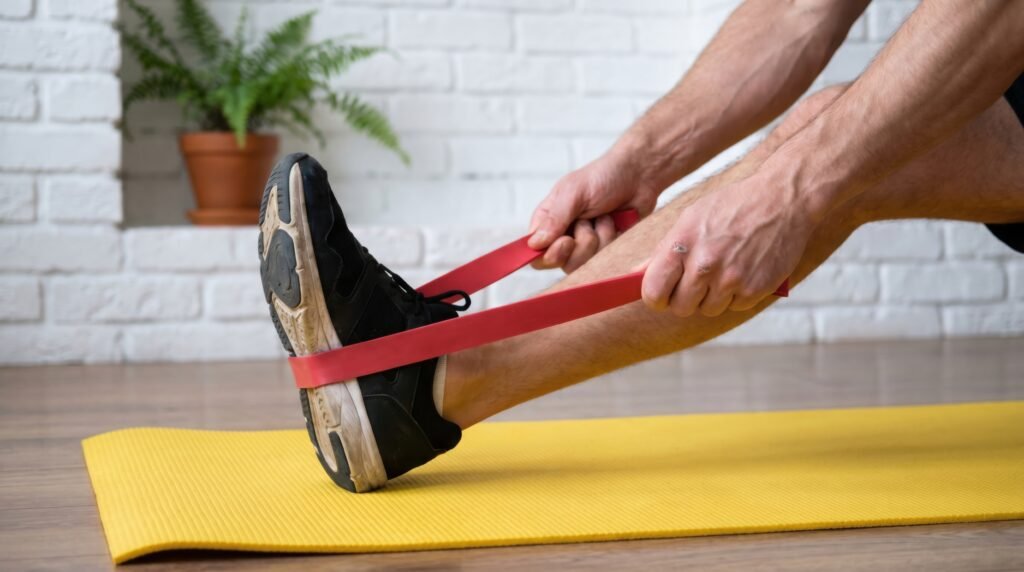
Exercise should always be the priority, but several products can make rehabilitation more comfortable.
Patellar tendon strap
Can reduce discomfort during running and jumping.
Looking for extra support? Read our complete guide to the Best Patellar Tendonitis Bands and Knee Supports for Footballers.
Resistance bands
Useful for:
- Hip strengthening
- Glute activation
- Warm-ups
Foam roller
Helpful for improving quadriceps mobility before rehabilitation sessions.
Massage gun
May help reduce muscle tightness surrounding the knee.
Evidence & Science
Research consistently shows that progressive tendon loading provides the greatest long-term improvement.
Current evidence supports:
- Heavy Slow Resistance Training
- Eccentric strengthening
- Isometric exercises for short-term pain relief
Passive treatments alone have limited evidence.
FAQs
Can I play football with patellar tendonitis?
Mild cases may tolerate modified training, but continuing through worsening pain can delay recovery.
Should I stretch my patellar tendon?
Stretching surrounding muscles may help flexibility, but strengthening exercises remain the cornerstone of rehabilitation.
How long does recovery take?
Many footballers improve within 8–12 weeks with a structured loading programme, though chronic cases can take longer.
Are squats good for patellar tendonitis?
Yes, when introduced progressively. Exercises such as Spanish squats and decline squats are commonly used in rehabilitation.
Related Articles
Best Patellar Tendonitis Bands and Knee Supports for Footballers
MCL Recovery guide for footballers
Football Recovery Nutrition Guide (future article)
Conclusion
The best exercises for patellar tendonitis don’t simply reduce pain—they strengthen the tendon so it can tolerate football again. Progress patiently, increase loading gradually and combine rehabilitation with sensible return-to-play planning.